
Botnia Skincare Alternatives for Eczema: 2026 Guide

Table of Contents
- What Makes a Botnia Skincare Alternative Work for Eczema
- How to Manage Eczema Flare-Ups Naturally
- Natural Eczema Relief Products Worth Trying
- Botanical Ingredients to Look For and Ingredients to Avoid
- Ingredient Interaction Safety: What Not to Layer Together
- The Real Cost of Botnia Skincare Alternatives
- Conclusion
- Frequently Asked Questions
Last Updated: October 2, 2026
What Makes a Botnia Skincare Alternative Work for Eczema
Eczema is a chronic inflammatory skin condition, and atopic dermatitis is its most common form. Finding a botnia skincare alternatives for eczema routine starts with two questions: does the formula support the skin barrier, and does it leave out the ingredients that trigger irritation? This guide from Forev'Herbs walks through both.
The skin barrier is your first line of defense. When it weakens, moisture escapes and irritants get in. That cycle is what drives most flare-ups.
Skin Barrier Function and Transepidermal Water Loss
Transepidermal water loss is the amount of water that evaporates through the skin's surface. A damaged lipid barrier lets more water escape, which leaves skin dry, tight, and reactive.
Three ingredient classes help here:
- Emollients soften and smooth rough patches
- Occlusives seal in moisture by forming a protective layer
- Humectants pull water into the upper skin layers
Ceramides, niacinamide, and jojoba oil are common in barrier-repair formulas. Look for them on the label before anything else.
Why Fragrance-Free and Hypoallergenic Formulas Matter
Fragrance is one of the most common causes of irritant contact dermatitis. A product labeled "natural" can still contain essential oils that aggravate eczema-prone skin.
Hypoallergenic means the formula is designed to reduce allergic reactions, though no product is truly risk-free for every person. Fragrance-free is the safer choice during a flare-up.
How to Manage Eczema Flare-Ups Naturally
Managing flare-ups naturally comes down to three habits: consistent moisturizing, gentle cleansing, and avoiding known triggers. None of these replaces medical care, but each one reduces how often skin reacts.
Patch Testing Protocols Before You Commit
Patch testing is the step most people skip, and it's the one that prevents the worst reactions. Here's a simple protocol:
- Apply a small amount to the inner forearm
- Cover with a bandage and leave for 24 hours
- Remove and check for redness, itching, or bumps
- If clear, repeat on a small patch near the affected area
- Wait another 24 hours before full use
Climate-Specific Adjustments for Dry and Humid Seasons
Dry winter air pulls moisture from skin, so heavier occlusives earn their place from late fall through early spring. Humid summers call for lighter emollients that won't trap sweat against the skin.
Natural Eczema Relief Products Worth Trying
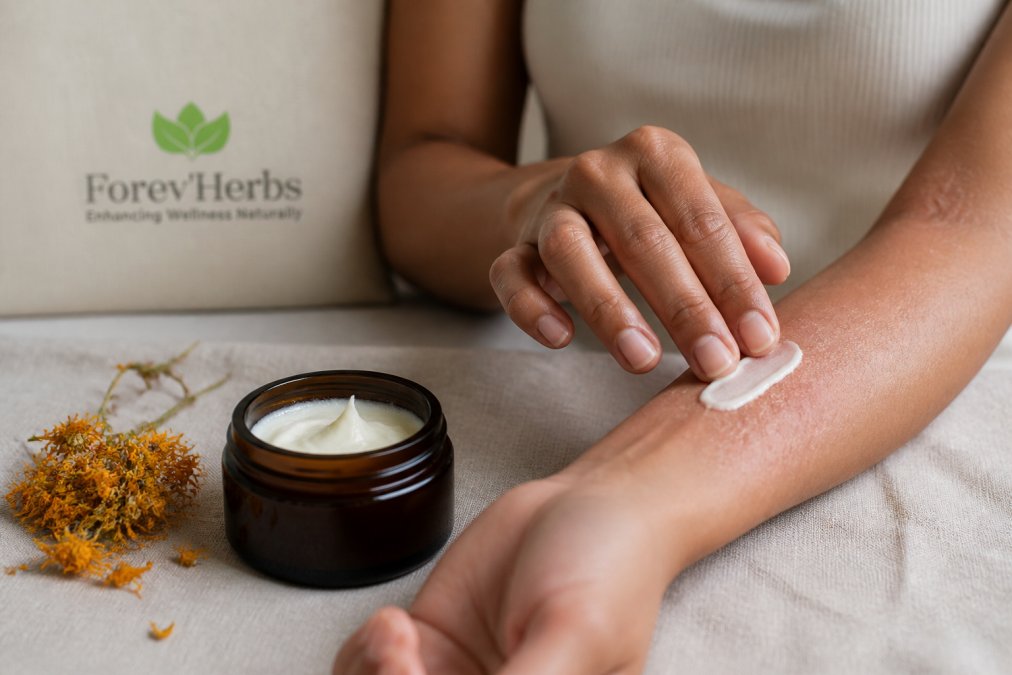
Eczema Cream: Colloidal Oatmeal and Tamanu Oil
Forev'Herbs Eczema Cream ($15.99) leans on colloidal oatmeal and tamanu oil, two ingredients with long traditional use in skin repair. Colloidal oatmeal is recognized by the FDA as a skin protectant, it forms a protective barrier that locks in moisture and reduces itch signals. Tamanu oil contains calophyllolide, a compound studied for its anti-inflammatory properties, which helps calm the redness that accompanies flare-ups.
Sensitive & Dry Skin Body Oil and Unscented Oatmeal Soap
Forev'Herbs Sensitive & Dry Skin Body Oil ($19.99) blends kukui, sweet almond, sunflower, hazelnut, and castor oils to restore the skin barrier and calm redness. Kukui oil is high in linoleic acid, which eczema-prone skin often lacks, a deficiency linked to a weaker barrier. Sunflower oil is rich in vitamin E and linoleic acid, and studies show it can improve hydration when applied topically.
| Product | Price | Key Ingredients | Best For |
|---|---|---|---|
| Eczema Cream | $15.99 | Colloidal oatmeal, tamanu oil, shea butter | Targeted flare-up relief |
| Sensitive & Dry Skin Body Oil | $19.99 | Kukui, sweet almond, sunflower oils | Daily barrier hydration |
| Unscented Oatmeal Soap | $6.75 | Goat milk, oatmeal | Gentle, fragrance-free cleansing |
How to Build a Routine with These Products
A common pattern is to cleanse with the oatmeal soap, apply the body oil to damp skin, and seal with the eczema cream on the driest or most irritated areas. This layering order follows the principle of thinnest to thickest: water-based products first, oils next, occlusives last. If you're new to botanical skincare, introduce one product at a time and patch test before full use.
Botanical Ingredients to Look For and Ingredients to Avoid
Certain botanicals calm eczema-prone skin, while others quietly make it worse. Knowing the difference saves you from repeated trial and error. But the bigger issue most guides skip is interaction: even beneficial ingredients can cause problems when layered with the wrong partner. This section covers both what to look for and how to combine them safely.
Ingredients worth seeking out:
- Colloidal oatmeal, FDA-recognized skin protectant that reduces itch and inflammation
- Ceramides and niacinamide, rebuild the lipid barrier and improve moisture retention; niacinamide also reduces redness
- Licorice root and calendula, soothing agents that calm irritation without steroids
- Jojoba oil and sunflower seed oil, lightweight moisture that mimics skin's natural sebum; sunflower oil is high in linoleic acid, which eczema-prone skin often lacks
- Hydrosols, gentle, water-based alternatives to harsh toners; look for rose or chamomile hydrosol
Ingredients to avoid:
- Synthetic fragrance and essential oils during flare-ups, even lavender and tea tree can trigger contact dermatitis
- Drying alcohols (denatured alcohol, isopropyl alcohol) and harsh sulfates (sodium lauryl sulfate)
- Synthetic preservatives like parabens and formaldehyde releasers (quaternium-15, DMDM hydantoin)
- Added dyes and fragrance-free claims that still list "parfum" or "fragrance" on the label
Ingredient Interaction Safety: What Not to Layer Together
Layering the wrong products can undo the benefits of both. This is the topic most guides skip, and it's where a good routine quietly fails.
Patch Testing Protocols Before You Commit
Patch testing is the step most people skip, and it's the one that prevents the worst reactions. Here's a simple protocol:
- Apply a small amount to the inner forearm
- Cover with a bandage and leave for 24 hours
- Remove and check for redness, itching, or bumps
- If clear, repeat on a small patch near the affected area
- Wait another 24 hours before full use
Ingredient Interaction Safety: What Not to Layer Together
Layering the wrong products can undo the benefits of both. This is the topic most guides skip, and it's where a good routine quietly fails.
The Real Cost of Botnia Skincare Alternatives
Cost is where natural skincare earns or loses its case. A single botanical cream often costs more than a drugstore tub, so the question is whether the formula justifies the difference.
Conclusion
Building a routine for eczema-prone skin takes patience, and the wrong product can set you back weeks. Forev'Herbs makes that process simpler with petroleum-free, botanical-based formulas that support the skin barrier instead of stripping it. The Eczema Cream calms active irritation with colloidal oatmeal and tamanu oil, the Sensitive & Dry Skin Body Oil restores moisture with kukui and sunflower oils, and the Unscented Oatmeal Soap cleanses gently without fragrance.
Frequently Asked Questions
What ingredients should I avoid if I have eczema?
Steer clear of synthetic fragrance, drying alcohols, and harsh sulfates, which strip the lipid barrier and worsen irritant contact dermatitis. Many people also react to essential oils like citrus and lavender, so patch test before use. Synthetic preservatives such as parabens and formaldehyde releasers can trigger flare-ups in sensitive skin. Look for fragrance-free, hypoallergenic formulas instead. Ingredients like colloidal oatmeal, shea butter, and jojoba oil support skin barrier function without added irritants, making them safer choices for daily use on eczema-prone skin.
Are natural skincare products better for eczema?
Natural products can help, but botanical does not automatically mean gentle. Some plant extracts and essential oils cause irritation, so the formula matters more than the label. What works is a product built around emollients, occlusives, and humectants that reduce transepidermal water loss and support the lipid barrier. Fragrance-free, hypoallergenic options with soothing agents like colloidal oatmeal and calendula tend to perform best. Natural eczema relief products can calm flare-ups when they avoid known irritants and focus on barrier repair rather than fragrance or exfoliation.
How do I know if a skincare product is safe for eczema-prone skin?
Start with a patch test on your inner forearm, applying a small amount twice daily for three to five days before using it on larger areas. Check the ingredient list for fragrance, essential oils, and drying alcohols, which commonly trigger reactions. Look for dermatologist-recommended ingredients like ceramides, niacinamide, and colloidal oatmeal that support skin barrier function. A product labeled fragrance-free and hypoallergenic is a safer starting point. If redness, itching, or burning appears during patch testing, stop use and try a simpler formula.
What are the best botanical ingredients for soothing eczema?
Colloidal oatmeal, calendula, shea butter, and tamanu oil are among the most reliable soothing agents for eczema-prone skin. Colloidal oatmeal calms itch and supports skin barrier function, while calendula offers calming properties that reduce visible redness. Shea and mango butters act as occlusives and emollients, sealing in moisture and limiting transepidermal water loss. Jojoba oil and sunflower seed oil are lightweight emollients that absorb without clogging pores. Together, these botanical extracts and oils deliver natural eczema relief without synthetic fragrance or harsh preservatives.
Can herbal skincare help manage eczema flare-ups?
Herbal skincare can support flare-up management when it focuses on barrier repair and avoids irritants. Formulas with calendula, colloidal oatmeal, and tamanu oil help calm inflammation and lock in moisture, which reduces the frequency of dry, itchy episodes. Pairing a gentle, fragrance-free cleanser with a rich emollient cream twice daily supports skin barrier function. Herbal options work best as part of a consistent routine alongside dermatologist-recommended care, not as a replacement for prescribed treatment during severe flares. Patch testing each new product keeps reactions manageable.
These statements have not been evaluated by the FDA. These products are not intended to diagnose, treat, cure, or prevent any disease.