
Gentle Herbal Remedies for Sensitive Skin

Table of Contents
- Why Sensitive Skin Needs Herbal Care
- Best Herbs for Sensitive Skin and How They Work
- How to Patch Test Skincare Before Full Use
- Natural Ways to Hydrate Sensitive Skin
- Building a Gentle Skincare Routine for Children
- When to Stop Using a Remedy and Seek Medical Advice
- Frequently Asked Questions
Last Updated: October 20, 2026
Why Sensitive Skin Needs Herbal Care
Sensitive skin reacts quickly to irritants. It gets red, itchy, and uncomfortable. Many people search for help and find harsh chemicals instead of solutions. That's where gentle herbal remedies for sensitive skin come in.

Your skin's barrier is delicate. When it weakens, irritants slip through. Inflammation follows. Itching starts. At Forev'Herbs, we've spent years working with families who deal with this exact problem. The answer isn't stronger products, it's smarter ones.
Herbal remedies work differently than synthetic treatments. Plants contain compounds that calm irritation naturally. They don't strip your skin. They support it. This guide walks you through the best herbs, how to use them safely, and when to know something isn't working.
Best Herbs for Sensitive Skin and How They Work
Several herbs have a strong reputation for soothing sensitive skin. Each one works in its own way. Some reduce inflammation. Others hydrate deeply. A few do both. Below is what is actually known about each, how it is typically prepared, and where the evidence is thin.
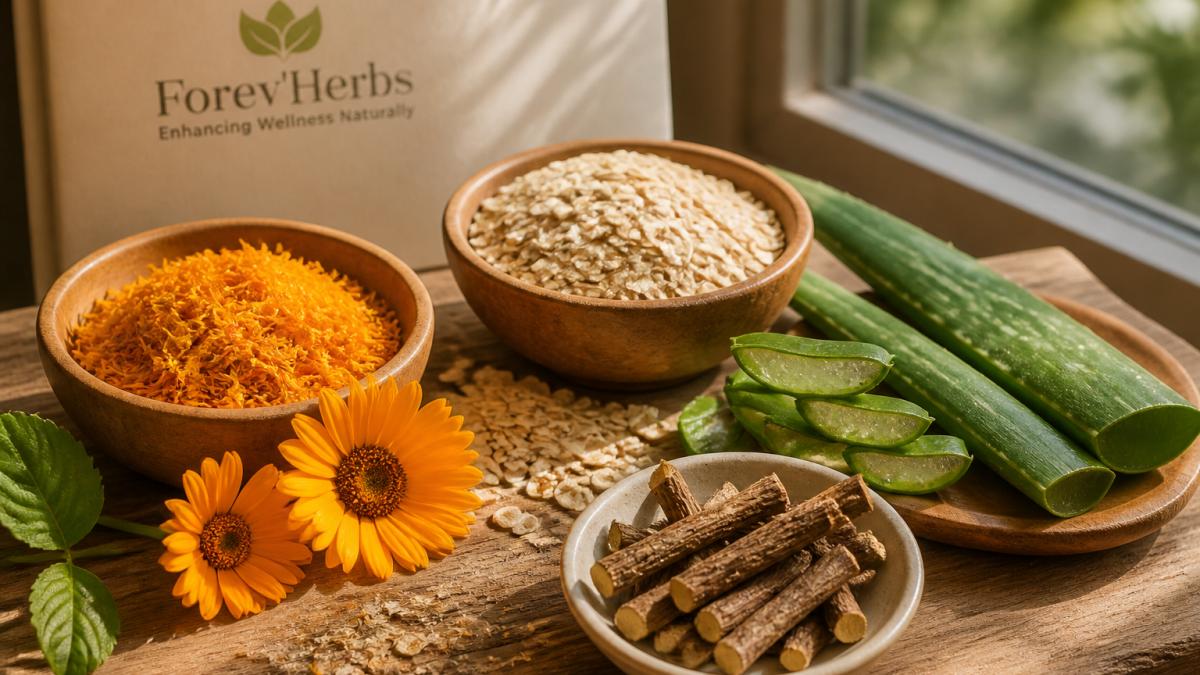
Calendula and Aloe Vera for Soothing Irritation
Calendula (Calendula officinalis) is a flower that has been used for centuries in traditional skin care. Its petals contain triterpenoids and flavonoids that are thought to calm redness and support the skin barrier.
Aloe vera works as a moisturizer and soother combined. The clear gel from the leaf contains polysaccharides that hold water against the skin and may reduce irritation.
Both plants are gentle enough for most children when used topically, but always patch test first. Both work well in creams, oils, and washes. If your skin reacts to most products, start with one of these two.
Our Eczema Cream at Forev'Herbs uses calendula-infused oil as a key ingredient. It is designed specifically for irritated skin that needs both soothing and deep hydration.
Oatmeal, Licorice Root, and Anti-Inflammatory Support
Oatmeal is different from calendula and aloe. It does not just soothe, it protects. Colloidal oatmeal (finely ground oats) forms a barrier on your skin. It locks moisture in. It blocks irritants out.
Licorice root (Glycyrrhiza glabra) contains glycyrrhizin and glabridin, compounds studied for their ability to reduce redness and swelling. When applied to skin, it may help calm irritation. It is particularly useful for sensitive skin because it can support the skin's natural defenses without irritation.
These herbs pair well together. Oatmeal provides immediate comfort. Licorice root may build long-term resilience. Combined, they address both the symptom and the underlying issue.
Our Unscented Oatmeal Handmade Soap combines oatmeal with goat milk for extra nourishment. It cleanses without stripping. It is fragrance-free, which matters for sensitive skin.
What the Evidence Says, and What It Does Not
Most herbal skin claims come from traditional use and small studies, not large clinical trials. Calendula and colloidal oatmeal have the strongest support for soothing irritated skin; aloe has moderate support for hydration and minor irritation; licorice root has promising but limited evidence. That does not mean the remedies do not work, it means you should treat them as gentle support, not as treatments for medical conditions. If your skin does not improve within two weeks, or if symptoms worsen, see a dermatologist.
How to Patch Test Skincare Before Full Use
Patch testing is essential. It prevents bad reactions before they happen.
Here's the process:
-
Pick a small area. Use the inside of your wrist or behind your ear. These spots are sensitive but hidden.
-
Apply a tiny amount. Use less than you think you need. A dot the size of a pea is enough.
-
Wait 24 hours. Don't wash it off. Let your skin react naturally.
-
Watch for changes. Look for redness, itching, swelling, or burning.
-
If nothing happens, test again. Apply the product to a slightly larger area the next day.
-
Use normally after three days. If no reaction appears by day three, the product is likely safe for you.
This process takes time. It's worth it. One bad reaction can set back your skin recovery by weeks.
Many people rush this step. They want relief now. But patience prevents setbacks. A few extra days of patch testing saves months of dealing with irritation.
Natural Ways to Hydrate Sensitive Skin
Hydration is half the battle with sensitive skin. Dry skin is irritated skin. Hydrated skin heals. Most guides stop at "use a moisturizer." This section gives you exact, fragrance-free recipes and storage guidance so you can hydrate sensitive skin without guessing.
Hydration happens in layers:
Layer 1: Cleanse gently. Use fragrance-free soap. Avoid hot water. Warm water is better. Pat dry instead of rubbing.
Layer 2: Apply hydrating products immediately. Do not wait. Damp skin absorbs moisture better than dry skin. Use a hydrating oil or cream right after washing.
Layer 3: Lock it in. A body oil seals moisture into your skin. It creates a protective layer. Forev'Herbs Sensitive & Dry Skin Body Oil is formulated for this exact purpose.

Layer 4: Repeat. Sensitive skin needs hydration multiple times daily. Morning and night is minimum. If your skin is very dry, add a midday application.
Sensitive & Dry Skin Body Oil →
Simple Fragrance-Free Recipes with Exact Proportions
These recipes use ingredients you can find at most grocery or health stores. Make small batches, keep them clean, and store them as directed. Always patch test before full use.
Calendula-infused oil (for body and face)
- 1/2 cup dried calendula petals
- 1 cup carrier oil (sunflower or sweet almond)
- Combine in a clean glass jar, seal, and place in a warm spot out of direct sun for 2 to 4 weeks, shaking daily.
- Strain through cheesecloth into a clean bottle. Store in a cool, dark place for up to 6 months. Makes about 1 cup.
Oatmeal bath soak (for itching)
- 1 cup finely ground colloidal oats (blend rolled oats until powdery)
- 1/4 cup baking soda (optional, for extra soothing)
- Add to a warm bath, soak 10 to 15 minutes, pat dry, and moisturize immediately. Use the whole batch per bath; do not store mixed soak.
Aloe and oil moisturizer (for daily hydration)
- 2 tablespoons aloe vera gel (fresh or pure, fragrance-free)
- 2 tablespoons carrier oil (jojoba or sunflower)
- Whisk together in a small bowl. Store in a clean jar in the refrigerator for up to 1 week. Makes about 1/4 cup.
Licorice root compress (for redness)
- 1 teaspoon dried licorice root
- 1 cup hot water
- Steep 10 minutes, cool to room temperature, soak a clean cloth, and apply for 5 to 10 minutes. Use fresh each time; do not store.
How to Choose a Format by Skin Concern
Not every remedy works best in the same form. Use this quick guide:
- Widespread dryness: body oil or cream applied to damp skin after bathing.
- Localized itching: oatmeal bath or oatmeal-based soap.
- Redness or rash: calendula cream or cooled licorice compress.
- Minor irritation: aloe gel or aloe-based moisturizer.
- Daily cleansing: fragrance-free oatmeal soap.
Start with one format and one new ingredient at a time. If you add three new things and your skin reacts, you will not know which one caused it. Space new products out by at least three days.
Drink water too. Internal hydration supports skin hydration. It is not a substitute for topical care, but it helps.
Building a Gentle Skincare Routine for Children
Children's skin is even more delicate than adult skin. Their skin barrier is still developing. Harsh products can damage it permanently.
A simple routine is best:
Morning:
- Rinse with warm water (no soap needed)
- Pat dry gently
- Apply a hydrating oil or cream
Evening:
- Wash with fragrance-free soap
- Pat dry
- Apply a richer cream or body oil
As needed:
- Use oatmeal-based products for itching
- Apply calendula cream for rashes
- Use aloe vera for minor irritation
Keep it minimal. Three products maximum. More products mean more chances for irritation.
Our TWIG children's brand focuses on this principle. Every product is designed to be gentle enough for young skin. No fragrance. No harsh chemicals. Just botanical ingredients that actually work.
Watch for signs of irritation. Children can't always tell you their skin hurts. Look for scratching, redness, or avoidance of touch. If you see these signs, simplify the routine immediately.
When to Stop Using a Remedy and Seek Medical Advice
Not every remedy works for every person. Knowing when to stop is as important as knowing when to start.
Stop and seek medical advice if:
- The irritation gets worse after three days of use
- New symptoms appear (severe swelling, blistering, or spreading rash)
- Itching becomes unbearable
- Signs of infection appear (warmth, pus, or foul smell)
- The skin doesn't improve after two weeks of consistent use
- Your child develops a fever along with skin symptoms
These signs mean the issue is beyond what home remedies can handle. A dermatologist can identify the actual problem and recommend appropriate treatment.
Allergic reactions are possible, even with natural products.
Some conditions look like simple irritation but aren't. Fungal infections, bacterial infections, and autoimmune skin conditions need professional diagnosis. Herbal remedies won't help them.
Trust your instincts. You know your skin or your child's skin better than anyone. If something feels wrong, get it checked.
Sensitive skin doesn't have to mean a complicated routine. The best approach is simple, consistent, and natural. Start with one gentle herbal remedy.
Forev'Herbs products are built on this philosophy. Our Sensitive & Dry Skin Body Oil, Unscented Oatmeal Handmade Soap, Unscented Shea Handmade Soap, and Eczema Cream all use botanical ingredients chosen specifically for sensitive skin. Each one is designed to support, not strip. Search our products to find what works for your skin, and start your gentle skincare journey today.

Frequently Asked Questions
What are the best herbs for sensitive skin?
Calendula, aloe vera, oatmeal, and licorice root are among the gentlest herbal remedies for sensitive skin. Calendula soothes irritation and redness, aloe vera provides deep hydration, oatmeal reduces itching and inflammation, and licorice root calms reactive skin. When choosing herbal remedies for sensitive skin, look for single-ingredient or minimally formulated products without added fragrance or dyes. Always patch test first, especially if your skin is prone to eczema or chronic dryness.
How do I patch test a new herbal skincare product?
Apply a small amount of the product to a clean, inconspicuous area like your inner forearm or behind your ear. Leave it on for 24-48 hours without washing, and observe for redness, itching, or burning. If no reaction occurs, apply a small amount to your face and wait another 24 hours before full use. This step-by-step approach helps you introduce one new ingredient at a time, which is especially important for sensitive skin prone to irritation or flare-ups.
Can herbal remedies irritate sensitive skin?
Yes, even natural herbal remedies can trigger reactions in sensitive skin. Essential oils, fragrance compounds, and plant proteins may cause irritation in some people. This is why patch testing and introducing one new remedy at a time is crucial. If you experience increased redness, itching, or a rash after using an herbal remedy, stop immediately and rinse thoroughly with cool water. Fragrance-free, unscented formulations are generally safer for sensitive skin than scented herbal products.
When should I see a healthcare professional about a skin rash?
Seek medical attention if a rash spreads rapidly, becomes painful or blistered, oozes fluid, or is accompanied by fever or swelling. If a rash persists for more than two weeks despite gentle care, or if home remedies worsen your symptoms, contact a dermatologist. For children with severe eczema or unexplained skin reactions, professional evaluation is important to rule out infections or other conditions requiring medical treatment.