
Safe Alternatives to Petroleum Based Lotions

Table of Contents
- Why Choose Safe Alternatives to Petroleum Based Lotions
- Understanding Petroleum-Derived Ingredients and Reading Labels
- Plant Oils as Natural Lotion Alternatives
- Organic Body Butters and Creams for Deep Hydration
- Petroleum-Free Lotion for Eczema-Prone Skin
- Fragrance-Free and Hypoallergenic Options for Sensitive Skin
- Comparison: Natural Alternatives vs. Traditional Petroleum Lotions
- How to Transition to Petroleum-Free Moisturizers
- Frequently Asked Questions
Last Updated: October 7, 2026
Why Choose Safe Alternatives to Petroleum Based Lotions
If you've read ingredient labels on conventional body lotions, you've likely noticed petroleum-derived ingredients like mineral oil, petrolatum, and paraffin wax near the top.
At Forev'Herbs, we understand why parents, eco-conscious consumers, and people with eczema are looking beyond traditional formulations. The shift toward plant-based moisturizers reflects a genuine desire to know exactly what's going on your skin.
Understanding Petroleum-Derived Ingredients and Reading Labels
Petroleum-derived ingredients dominate conventional lotions because they're inexpensive, stable, and effective at creating a smooth texture. But what are they, and why do some people avoid them?

Common Petroleum-Derived Names on Labels
Mineral oil, petrolatum, paraffin wax, and paraffin oil are petroleum byproducts used in skincare.
Other petroleum-derived names include liquid paraffin (another name for mineral oil) and microcrystalline wax. Some formulations use these as the primary base, others as secondary ingredients for texture and stability.
The real issue isn't toxicity, it's transparency: many families want products made from recognizable plant sources rather than refined fossil fuels.
What to Look for Instead
When reading labels on safe alternatives to petroleum based lotions, look for plant-based emollients and butters. Shea, cocoa, and mango butter and coconut oil create moisture barriers through natural fats.
Glycerin and plant-derived humectants draw moisture into the skin, while beeswax and plant waxes provide texture and stability without petroleum. When these appear first, the formulation prioritizes plant-based nourishment.
Check the order of ingredients, they're listed by concentration. If plant oils and butters appear in the first five ingredients, the product is genuinely plant-based. If mineral oil or petrolatum ranks first or second, it's the dominant ingredient regardless of marketing claims.
Plant Oils as Natural Lotion Alternatives
Plant oils are the most direct swap for petroleum-based emollients, but they are not interchangeable. Each differs by fatty-acid profile, comedogenic rating, and absorption speed, which determines the skin type it helps.
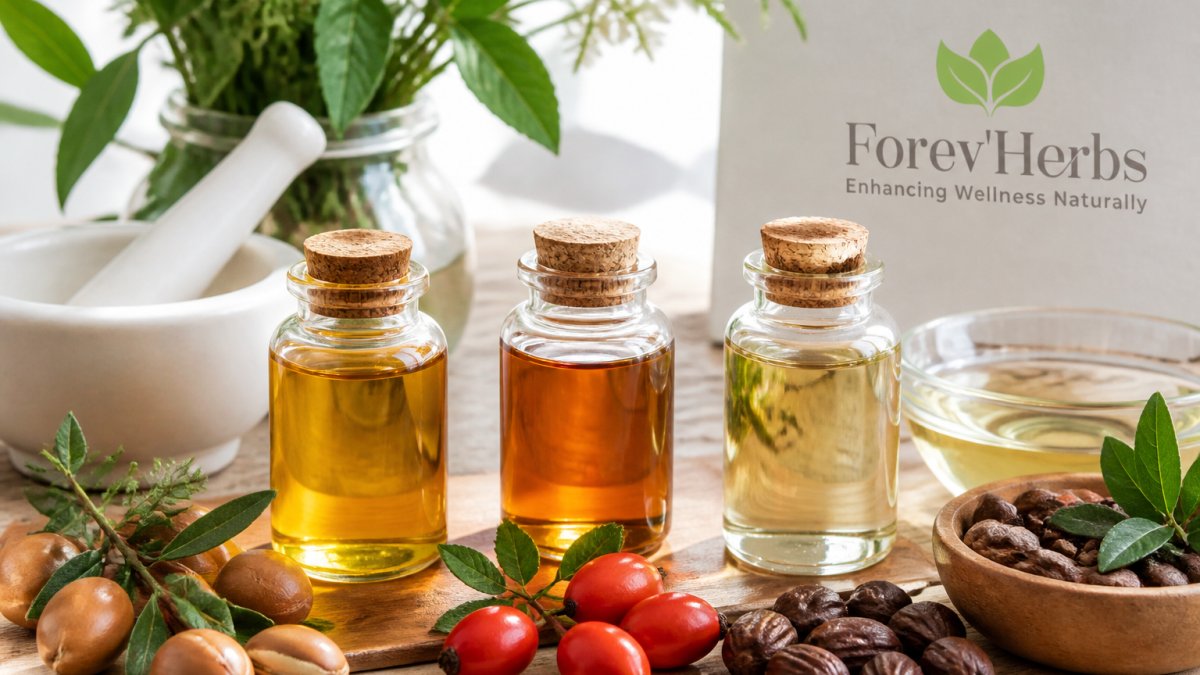
How Plant Oils Actually Moisturize
Mineral oil and petrolatum are occlusives: they sit on the surface and block transepidermal water loss. Most plant oils are emollients that fill the gaps between skin cells, while a smaller group, jojoba, tamanu, shea-derived fractions, also supports the lipid barrier.
Fatty-acid composition drives the rest. Linoleic-rich oils (sunflower, safflower, rosehip, grapeseed) are lighter and better for acne-prone or oily skin. Oleic-rich oils (olive, avocado, almond, marula) suit dry or mature skin but can feel heavy.
Best Plant Oils for Dry Skin
Argan, rosehip, and camellia oils penetrate deeply without a greasy residue.
For very dry skin, sunflower and safflower oils provide lightweight hydration with high linoleic acid and antioxidants. Kukui oil is unusually high in linoleic and alpha-linolenic acid and penetrates deeply.
A practical rule: apply oils to damp skin within about three minutes of showering, while the stratum corneum is still hydrated.
Oils for Sensitive and Eczema-Prone Skin
Sweet almond oil is gentle and rich in vitamins A and E, making it a common choice for reducing irritation. Hazelnut oil is lighter and suits combination skin.
For eczema-prone skin, tamanu oil has long been used for skin repair and barrier support, and calendula-infused oils add gentle anti-inflammatory properties. Colloidal oatmeal is one of the few botanicals clinically recognized for soothing eczema itch and pairs well with barrier oils.
When selecting an oil for sensitive skin, patch test on the inner forearm for 24 to 48 hours. Even natural ingredients can trigger contact dermatitis, and essential-oil blends carry higher risk than single-ingredient oils.
Quick Comparison by Skin Need
| Oil | Dominant Fatty Acid | Best For | Watch-Out |
|---|---|---|---|
| Jojoba | Wax esters (sebum-like) | All skin types, combination | Rare but possible sensitivity |
| Sunflower | Linoleic | Dry, acne-prone, sensitive | Can go rancid faster than stable oils |
| Safflower | Linoleic | Oily, acne-prone | Less occlusive for very dry skin |
| Argan | Oleic + linoleic | Dry, mature | Higher cost |
| Rosehip | Linoleic + linolenic | Dry, dull, uneven tone | Can be irritating during active flares |
| Sweet almond | Oleic | Sensitive, normal | Tree-nut allergy |
| Tamanu | Oleic + linoleic | Eczema-prone, barrier repair | Strong scent, thick texture |
| Castor | Ricinoleic | Very dry, flaking | Too viscous alone; usually blended |
This table lets you match an oil to a skin need instead of buying whichever bottle has the best marketing.
Organic Body Butters and Creams for Deep Hydration
While oils absorb quickly, butters create a richer texture and longer-lasting moisture barrier. Shea, mango, and cocoa butters lock in hydration without petroleum waxes.
The Forev'Herbs Organic Whipped Body Butters blend cocoa, shea, and mango butters with plant oils into a lightweight, non-greasy formula that absorbs completely, leaving skin soft rather than slick.

Butters work best on damp skin, where they seal in moisture. Unlike petroleum-based creams that sit on the surface, plant butters nourish while creating a protective layer.
Exotic Rose Organic Whipped Body Butter →
| Butter Type | Best For | Key Benefit |
|---|---|---|
| Shea Butter | All skin types | Rich moisture, non-comedogenic |
| Cocoa Butter | Dry skin | Deep hydration, antioxidant |
| Mango Butter | Sensitive skin | Gentle, soothing |
| Avocado Oil | Mature skin | Vitamin-rich, anti-inflammatory |
Petroleum-Free Lotion for Eczema-Prone Skin
Eczema demands a different approach than general dryness. The skin barrier is compromised, inflammation is active, and many conventional lotions trigger flare-ups.
Forev'Herbs Eczema Cream combines refined shea and mango butters with organic castor, tamanu, and jojoba oils, plus colloidal oatmeal and zinc oxide.
The formula is safe for babies, children, and adults. Applied 2-3 times daily, it calms irritation while strengthening the skin barrier.
Fragrance-Free and Hypoallergenic Options for Sensitive Skin
Fragrance, whether synthetic or essential oil-based, triggers reactions in many people with sensitive skin. If you have contact dermatitis or fragrance sensitivity, fragrance-free formulas are essential.
The Forev'Herbs Sensitive & Dry Skin Body Oil delivers hydration without fragrance, focusing on barrier-supporting ingredients.
When transitioning to fragrance-free products, give your skin 2-3 weeks to adjust; initial redness sometimes occurs as the barrier begins to repair.
Comparison: Natural Alternatives vs. Traditional Petroleum Lotions
| Factor | Petroleum-Based Lotions | Plant-Based Alternatives |
|---|---|---|
| Primary Ingredient | Mineral oil, petrolatum | Shea butter, plant oils, botanical extracts |
| Absorption | Sits on surface, slower absorption | Penetrates skin, faster absorption |
| Barrier Support | Creates occlusive layer | Nourishes while protecting |
| Fragrance Options | Often synthetic | Essential oil or fragrance-free |
| Environmental Impact | Fossil fuel-derived | Renewable plant sources |
| Cost | Generally lower | Typically higher |
| Shelf Life | Extended stability | Varies; requires proper storage |
| Eczema Suitability | Often triggers flare-ups | Generally gentle and supportive |
The choice comes down to priorities. Traditional lotions excel at affordability and shelf stability. Plant-based alternatives offer transparency, ingredient recognition, and often better results for sensitive or eczema-prone skin.
How to Transition to Petroleum-Free Moisturizers
Switching away from petroleum-based lotions is about sequencing, not willpower. The skin barrier adapts gradually, and the biggest mistakes are changing too many products at once, skipping patch tests, or assuming "natural" means gentler. A structured transition avoids all three.
Patch Test Before You Commit
Before applying any new moisturizer to your face or a large area, place a small amount on the inner forearm or behind the ear for 24 to 48 hours.
If you have a history of eczema, contact dermatitis, or allergies, patch test one product at a time and wait the full 48 hours before adding another.
Introduce One Product at a Time
Apply the new product two to three times per week on clean, damp skin, then increase frequency over two to three weeks. If irritation develops, slow down rather than pushing through. Introducing one product at a time with a two-week gap isolates which formula works and which triggers a reaction.
Apply to Damp Skin, Then Layer
Apply plant-based moisturizers within about three minutes of washing, while skin is still damp. Water hydrates; oils and butters hold it in. Layer a light humectant or oil first for penetration, then a butter or cream for barrier protection, maximizing hydration without the greasiness of applying heavy butter to dry skin.
Match the Formula to Your Skin Type
A decision guide is more useful than a single recommendation, because the right alternative depends on your skin.
- Dry skin: Start with a butter-based cream or a blend of oleic-rich oils (argan, avocado, sweet almond) applied to damp skin. Butters like shea and cocoa provide the longest-lasting barrier.
- Eczema-prone skin: Prioritize fragrance-free, barrier-supporting formulas with colloidal oatmeal or zinc oxide alongside plant butters. Avoid essential oils during active flares.
- Oily or acne-prone skin: Choose linoleic-rich, lower-comedogenic oils such as sunflower, safflower, grapeseed, or jojoba, and favor lotions over heavy butters.
Understand Preservation and Shelf Life
This is the trade-off most guides ignore. Water-based lotions, including many "natural" ones, require preservation, because water supports microbial growth. A preservative-free product is usually anhydrous (oil- or butter-based) or intended for refrigeration and short use.
Store plant-based products in a cool, dark place away from sunlight and heat, and check smell and texture periodically. Rancid oil smells off and can irritate skin.
When to Seek Medical Advice
If you experience spreading rash, oozing, swelling, or symptoms that don't improve within a week, stop the product and consult a clinician. Persistent eczema, suspected allergic contact dermatitis, and infected skin need professional evaluation, no over-the-counter moisturizer replaces that.
Frequently Asked Questions
What lotions do not have petroleum in them?
Lotions made from plant oils, botanical butters, and natural emulsifiers avoid petroleum entirely. Look for products listing ingredients like shea butter, coconut oil, jojoba oil, argan oil, rosehip oil, and plant-based glycerin. Reading the ingredient label carefully is your best tool, petroleum-derived ingredients often appear as mineral oil, petrolatum, paraffin, or petroleum distillates. Forev'Herbs organic whipped body butters and body oils use only plant-based ingredients, making them true petroleum-free alternatives for daily moisturizing.
How can I tell if a lotion contains petroleum-derived ingredients?
Check the ingredient list for these common petroleum-derived names: mineral oil, petrolatum, paraffin wax, petroleum distillates, and paraffin oil. These ingredients are inexpensive fillers that create a barrier on skin but don't absorb well. Natural alternatives appear as specific plant names, coconut oil, sunflower oil, shea butter, or jojoba oil. If you see vague terms like 'mineral oil' or 'paraffin,' that's petroleum. Transparent brands list botanical names (Latin or common), making it easy to verify what you're applying to your skin.
What should I look for in a moisturizer for eczema-prone skin?
Eczema-prone skin needs products that restore the skin barrier and reduce irritation. Choose moisturizers with colloidal oatmeal, zinc oxide, shea butter, and oils like jojoba, castor, and tamanu. Avoid fragrance, parabens, and talc, which can trigger flare-ups. Look for creams over lotions, they're thicker and provide longer-lasting hydration. Forev'Herbs Eczema Cream combines refined shea and mango butters with tamanu oil and colloidal oatmeal, specifically formulated to soothe eczema-prone skin and strengthen the moisture barrier without petroleum fillers.
Are plant oils better than butters for sensitive skin?
Both can work for sensitive skin, but they serve different purposes. Oils absorb quickly and provide lightweight hydration, making them ideal for sensitive skin that's easily overwhelmed. Butters sit on the skin longer, creating a richer moisture barrier, better for very dry or eczema-prone skin. For sensitive skin, lighter plant oils like jojoba, hazelnut, and sweet almond oil are often better tolerated. Whipped body butters offer a middle ground: they're fluffy and non-greasy despite their richness. Test your skin's preference by starting with oils, then adding butters if needed for extra protection.
Is shea butter a good alternative to petroleum jelly?
Yes, shea butter is an excellent alternative to petroleum jelly. While petroleum jelly sits on the skin without absorbing, shea butter penetrates deeply, nourishing skin with vitamins A, E, and fatty acids. Shea butter supports the skin barrier and provides genuine hydration rather than just occlusion. It's especially beneficial for eczema-prone and sensitive skin. Refined shea butter is hypoallergenic and fragrance-free, making it suitable for delicate skin. Many natural skincare brands, including Forev'Herbs, use shea butter as a core ingredient in their creams and body butters for this reason.