
Standardized Herbal Remedies for Wellness: A Complete Guide

Table of Contents
- What Are Standardized Herbal Remedies?
- Standardized vs Whole Herb Supplements: Key Differences
- How to Choose High-Quality Herbal Supplements
- FDA Regulation of Herbal Dietary Supplements
- Common Medicinal Plants and Their Evidence-Based Uses
- Integrating Standardized Herbal Remedies Into Your Wellness Routine
- Frequently Asked Questions
Last Updated: October 4, 2026
What Are Standardized Herbal Remedies?
Standardized herbal remedies are botanical preparations processed to contain a consistent, measurable amount of one or more active compounds. Unlike whole herb supplements that vary in potency from batch to batch, standardized herbal remedies ensure you receive the same therapeutic dose every time you take them.
The standardization process identifies and isolates marker compounds, the specific bioactive constituents responsible for a plant's therapeutic effects. Elderberry syrup, for example, is standardized to contain a guaranteed percentage of anthocyanins, the flavonoids that support immune function.

How Standardization Works in Herbal Medicine
The standardization process begins with identifying which compounds in a plant are responsible for its therapeutic activity. Researchers analyze the plant's chemistry, then establish a baseline range for those active ingredients. A standardized extract is then manufactured to meet that specification consistently.
The process involves harvesting at peak potency, extracting active compounds, and concentrating the final product to meet target specifications. Quality control testing at multiple stages verifies batch consistency.
Standardization enables reliable, reproducible results in phytotherapy. Without it, two bottles of the same herb could have vastly different potency, making effective dosing impossible.
Marker Compounds and Bioactive Constituents
A marker compound is a measurable chemical that indicates the presence of therapeutic activity, not necessarily the healing agent itself, but a reliable indicator that active ingredients are present in adequate amounts.
Echinacea, for instance, is standardized to contain specific polyphenols and alkylamides. Ginger root standardization targets gingerols and shogaols. Elderberry focuses on anthocyanins. Each of these marker compounds correlates with the herb's documented therapeutic effects.
A marker compound proves authenticity and potency; active ingredients produce the wellness benefit. Modern herbal medicine uses both concepts to ensure quality and efficacy.
Standardized vs Whole Herb Supplements: Key Differences
The choice between standardized and whole herb supplements depends on your goal, consistency needs, and how you plan to use the remedy.
| Aspect | Standardized Extract | Whole Herb |
|---|---|---|
| Potency Consistency | Guaranteed percentage of active compounds | Varies batch to batch |
| Dosage Precision | Exact therapeutic dose per serving | Approximate dose |
| Bioavailability | Often enhanced through extraction | Depends on preparation method |
| Cost | Higher per dose | Lower initial cost |
| Traditional Use | Modern interpretation | Honors traditional preparation |
Standardized remedies deliver predictability, you know exactly how much active ingredient you're consuming. Whole herb supplements preserve the plant's complete chemical profile, which some practitioners argue offers synergistic benefits.
Potency and Dosage Consistency
Standardized herbal remedies provide measurable potency. If an elderberry syrup is standardized to 15% anthocyanins, every spoonful contains that concentration. This consistency allows you to establish an effective dose and maintain it reliably.
Whole herbs vary naturally due to growing conditions, harvest timing, storage, and processing.
Dosage guidelines for standardized products reflect this precision. A standardized extract might recommend 1 teaspoon daily because that dose delivers the researched therapeutic amount. Whole herb dosing tends to be broader, "1-2 teaspoons daily", because the actual potency is unknown.
Bioavailability and Absorption Factors
Bioavailability, how much of an herb's active compounds your body absorbs, is often superior in standardized extracts because the extraction process concentrates active compounds and removes material that can interfere with absorption.
Whole herbs contain everything, active compounds, fiber, tannins, and other materials. Your body must extract therapeutic compounds during digestion, which is less efficient, though some practitioners argue the "supporting cast" of compounds enhances primary active ingredients synergistically.
Temperature, preparation method, and individual digestion also affect bioavailability. Cold infusions extract different compounds than hot water, and compromised digestion may reduce absorption from whole herbs.
How to Choose High-Quality Herbal Supplements
Quality separates effective remedies from wasted money. The herbal supplement market ranges from rigorously tested clinical-grade products to items with minimal quality control.
Examine what the label tells you. Quality supplements list the plant part (leaf, root, flower), form (extract, powder, whole herb), and standardization percentage. "Proprietary Blend" with no transparency is a red flag.
Third-party testing provides independent verification that a product contains what the label claims and is free from contaminants. This is the gold standard for supplement quality.
Reading Labels for Quality Markers
Quality labels include the plant's scientific name (Latin binomial) to confirm the correct species, since common names vary by region.
The plant part matters enormously, echinacea root and aerial parts have different chemical profiles and uses. Quality labels specify which part was used.
Extract ratio indicates concentration, a 4:1 ratio means four units of plant material concentrated into one. Higher ratios suggest greater potency, though ratio alone doesn't guarantee quality.
Third-Party Testing and Purity Standards
Third-party testing means an independent laboratory analyzed the product.
The FDA does not pre-approve dietary supplements but enforces regulations on claims and requires manufacturing according to current Good Manufacturing Practices (cGMP), which set standards for facility cleanliness, equipment maintenance, and quality control.
Purity testing checks for lead, cadmium, and pesticide residues. Potency testing confirms active ingredients at stated concentration. Microbial testing ensures absence of harmful bacteria and mold.
Look for third-party certification seals on labels or check manufacturer websites for test results. If a company won't share testing data, choose a different product.
FDA Regulation of Herbal Dietary Supplements
The FDA classifies herbal remedies as dietary supplements, not drugs. This distinction shapes what manufacturers can claim and how the products are regulated.
Dietary supplements don't require FDA approval before sale, unlike prescription medications, but manufacturers must follow cGMP standards. The FDA can remove unsafe products or those with false or misleading claims (the FDA).
What the FDA Actually Requires
Manufacturers must ensure products are safe with truthful, non-misleading claims. The FDA prohibits disease claims ("cures" or "treats"), requiring structure-function claims instead: "supports immune health" rather than "treats the flu."
The Dietary Supplement Health and Education Act (DSHEA) of 1994 established this framework, requiring Supplement Facts panels listing ingredients and amounts (the FDA). Manufacturers must report serious adverse events to the FDA.
Labels must include a disclaimer: "These statements have not been evaluated by the Food and Drug Administration.
Drug-Herb Interaction Safety and Regulatory Labeling
Some herbs interact with medications. St. John's Wort reduces the effectiveness of birth control and certain psychiatric medications (pubmed.ncbi.nlm.nih.gov). Ginkgo biloba can increase bleeding risk when combined with blood thinners.
Quality herbal products include warnings about known interactions on the label or in accompanying literature.
The FDA requires that supplement labels include warnings for specific safety concerns. For example, products containing kava must warn about potential liver toxicity.
Regulatory labeling standards exist to protect consumers, but they're less stringent than drug labeling.
Common Medicinal Plants and Their Evidence-Based Uses
Certain botanicals have accumulated substantial traditional use and modern research support. Understanding which herbs address which wellness concerns helps you make informed choices.
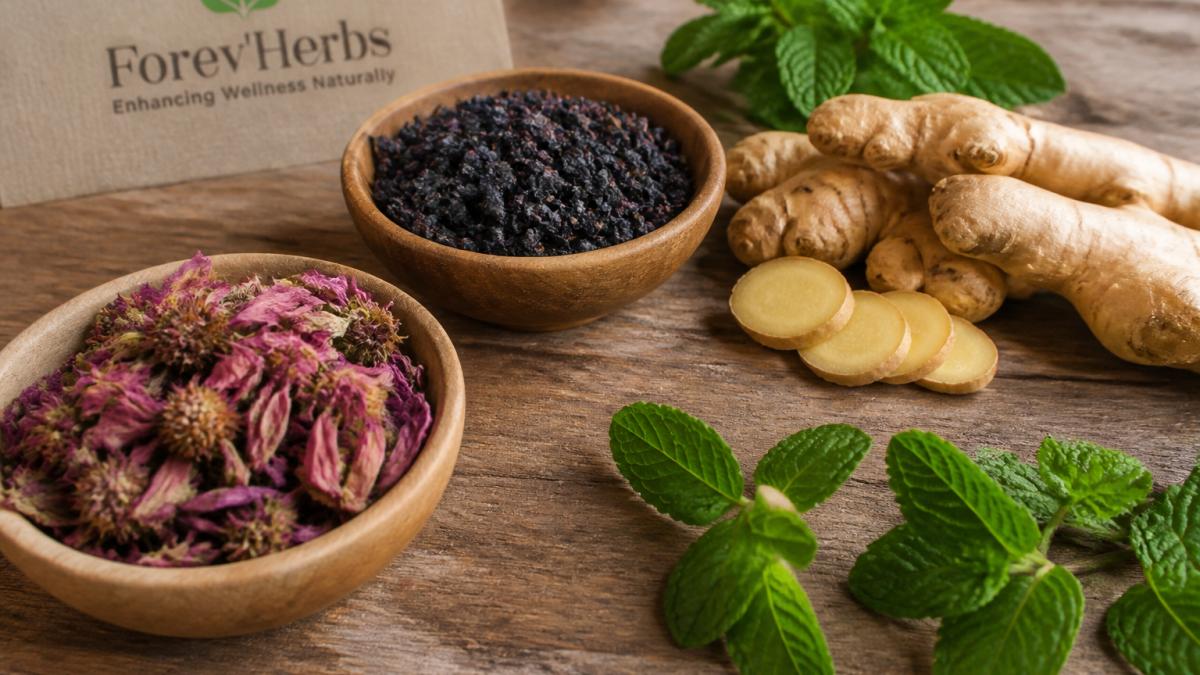
Immune-Supportive Herbs and Respiratory Health
Elderberry has been used for centuries to support immune function and respiratory health. The plant's anthocyanins and other polyphenols contribute to its traditional reputation.
Ginger root supports respiratory comfort and general wellness. Peppermint leaves soothe the respiratory tract and promote clear breathing. These herbs are often combined in formulas designed to support immune defenses during cold and flu season.

Forev'Herbs offers Organic Elderberry Syrup and Organic Chokeberry Syrup as standardized immune-supportive options. The Cold and Flu Herbal Tea combines elderflower, echinacea, ginger, and other respiratory-supportive herbs in a convenient herbal infusion format.

Digestive and Wellness Support Herbs
Peppermint supports digestive comfort and promotes relaxation. Ginger aids digestion and reduces bloating. Fennel seed has been used traditionally to support healthy digestion and reduce gas. Chamomile promotes calm and relaxation, supporting overall wellness.
These herbs are often prepared as herbal infusions, steeped in hot water to extract their active compounds. The Relaxing Digestion Herbal Tea from Forev'Herbs combines peppermint, ginger, chamomile, fennel, and other digestive-supportive botanicals in a single convenient product.
Integrating Standardized Herbal Remedies Into Your Wellness Routine
Adding herbal remedies to your daily wellness practice requires understanding dosage, timing, and how to source quality products responsibly.
Dosage Guidelines and Safe Administration
Standardized herbal remedies come with specific dosage recommendations based on the extract's potency and the research supporting its use. Always follow label directions.
Timing matters for some herbs. Immune-supportive remedies are often taken daily during cold and flu season for prevention, then increased at the first sign of illness. Digestive herbs are typically taken before or after meals.
Consistency produces better results than sporadic use. Taking a remedy daily for two weeks provides more reliable feedback about its effectiveness than occasional doses.
Sourcing, Sustainability, and Quality Assurance
Where your herbs come from affects both quality and environmental impact. Responsibly sourced botanicals come from suppliers who practice sustainable harvesting, avoid pesticides, and support fair labor practices.
Forev'Herbs prioritizes sustainable sourcing and holds certifications reflecting this commitment: Silver Certified Natural Business status and Montgomery County Green Business certification.
When evaluating any herbal product, ask: Does the company disclose where ingredients come from? Do they conduct third-party testing? Are they transparent about their manufacturing process?
Quality assurance extends beyond testing.
Choosing standardized herbal remedies requires understanding the difference between marketing claims and actual quality.
Frequently Asked Questions
What is standardization of herbal medicines?
Standardization ensures that herbal remedies contain consistent amounts of active compounds from batch to batch. Manufacturers measure marker compounds, the bioactive constituents responsible for therapeutic effects, and adjust extraction methods to deliver predictable potency. This differs from whole herbs, which vary naturally in strength depending on growing conditions, harvest timing, and storage. Standardized herbal remedies let you know exactly what dose you're receiving, making them more reliable for wellness support.
How do I identify high-quality herbal supplements?
Look for products that list specific extract ratios (e.g., 4:1 or 10:1), identify marker compounds on the label, and carry third-party testing seals from organizations like USP or NSF. Check that the supplier discloses sourcing practices and storage conditions. Reputable brands provide batch testing results, list all ingredients with botanical names, and comply with FDA labeling requirements. Avoid products making disease claims or lacking transparency about where ingredients come from.
Are standardized herbal remedies regulated by the FDA?
The FDA regulates herbal supplements as dietary supplements under the Dietary Supplement Health and Education Act (DSHEA), not as drugs. This means manufacturers must ensure safety and that label claims are truthful, but products don't require FDA approval before sale. Manufacturers must report adverse reactions and maintain quality standards, but the burden of proof for efficacy rests differently than with pharmaceuticals. Always check labels for compliance statements and avoid products claiming to treat, cure, or prevent disease.
What's the difference between standardized extracts and whole herbs?
Standardized extracts isolate and concentrate specific active compounds, delivering consistent dosage and faster absorption. Whole herbs contain the complete plant material with all naturally occurring compounds, which may provide synergistic benefits but vary in potency. Standardized extracts suit people seeking predictable therapeutic effects and precise dosing; whole herbs appeal to those practicing traditional herbal medicine or seeking the full plant profile. Both have valid uses depending on your wellness goals.
What should I look for on a supplement label to ensure quality?
Check for the supplement facts panel listing active ingredients with extract ratios (e.g., 5:1 elderberry extract), marker compounds identified by percentage, and third-party testing certifications. Verify the manufacturer's name and address, expiration date, and storage instructions. Look for statements about organic certification, non-GMO status, or natural business certifications. Avoid vague terms like 'herbal blend' without specific ingredient amounts. Transparent labeling and quality assurance practices signal a manufacturer committed to potency and purity.
How do bioavailability and absorption affect herbal remedy effectiveness?
Bioavailability refers to how much of an herb's active compounds your body actually absorbs and uses. Standardized extracts often have higher bioavailability because extraction concentrates active compounds and removes fiber that can slow absorption. Factors like food intake, stomach acid, and individual digestion affect how well your body processes herbal remedies. Herbal infusions and teas may have lower bioavailability than concentrated extracts but offer the benefit of hydration and whole-plant constituents working together for wellness support.
What are common medicinal plants used in standardized herbal remedies?
Popular standardized herbs include elderberry for immune support, echinacea for respiratory health, ginger for digestion, and chamomile for relaxation. Chokeberry (aronia) offers antioxidant protection, while peppermint supports digestive comfort. Each has traditional use histories and some clinical evidence supporting their wellness benefits. Standardized versions of these plants ensure you receive consistent potency. Always consult product labels to confirm specific therapeutic claims and check for any potential interactions with medications you take.