
How to Soothe Child Skin Irritation Naturally?

Last Updated: October 25, 2026
Quick Summary
To soothe child skin irritation naturally, use cool compresses for 10-15 minutes, apply fragrance-free moisturizers within 3 minutes of bathing while skin is still damp, and identify and remove irritating triggers like harsh soaps or synthetic fabrics. Consistency with gentle home care improves most mild rashes within 2 weeks.
- Apply moisturizer 2-3 times daily minimum, using a visible layer rather than a thin smear.
- Cool compresses should be repeated 2-3 times daily or whenever itching intensifies.
- Choose fragrance-free and dye-free products, avoiding those labeled only unscented.
- If a rash persists beyond 2 weeks or worsens despite home care, contact your pediatrician.
- Loose cotton clothing prevents friction and heat that can worsen skin irritation.
Table of Contents
- Understanding What Causes Child Skin Irritation
- Home Remedies for Itchy Eczema in Children
- Gentle Bathing and Cleansing Your Child's Skin
- Best Ointment for Kids' Rashes: Moisturizing and Protecting
- How Long Does a Rash Last in Children?
- When to See a Doctor for a Child's Rash
- Preventing Scratching and Further Skin Damage
- Building a Daily Skin Care Routine for Sensitive Skin
- Frequently Asked Questions
Understanding What Causes Child Skin Irritation
Child skin irritation ranges from mild redness to severe inflammation, and understanding the root cause is your first step toward learning how to soothe child skin irritation. Your child's skin is thinner and more delicate than adult skin, which makes it more vulnerable to irritants and allergens. You can explore gentle herbal remedies for sensitive skin to deepen your understanding of both what causes irritation and how natural approaches can help. Common triggers include harsh soaps, synthetic fabrics, dry air, temperature changes, and exposure to irritating substances.
Two main types of skin irritation affect children: allergic contact dermatitis and irritant contact dermatitis. Allergic contact dermatitis happens when your child's immune system reacts to a specific substance like poison ivy, nickel, or fragrance. Irritant contact dermatitis occurs when something simply irritates the skin barrier without triggering an allergic response.
Eczema, also called atopic dermatitis, is one of the most common skin conditions in children. It causes intense itching, dry patches, and inflammation. Unlike a simple rash that appears suddenly, eczema tends to flare up over time and requires consistent management.
At Forev'Herbs, we understand that finding relief for your child's skin irritation can feel overwhelming. Many parents struggle to identify what's causing the problem and which remedies actually work. The American Academy of Dermatology notes that childhood skin conditions are increasingly common, making it essential to recognize symptoms early and respond with gentle, effective care.
Home Remedies for Itchy Eczema in Children
Home remedies can provide immediate relief while you work toward long-term healing. The key is using gentle, natural approaches that calm inflammation and restore your child's skin barrier without introducing harsh chemicals.
Cool Compresses and Cold Wet Cloths
Here's how to use cool compresses effectively:
- Soak a soft washcloth in cool (not cold) water
- Gently apply it to the irritated area for 10-15 minutes
- Repeat 2-3 times daily or whenever itching intensifies
- Pat skin dry gently, never rub
Keep several washcloths in your refrigerator so they're ready when needed.
Colloidal Oatmeal Baths
Our Unscented Oatmeal Handmade Soap contains oatmeal and goat milk.

Gentle Bathing and Cleansing Your Child's Skin
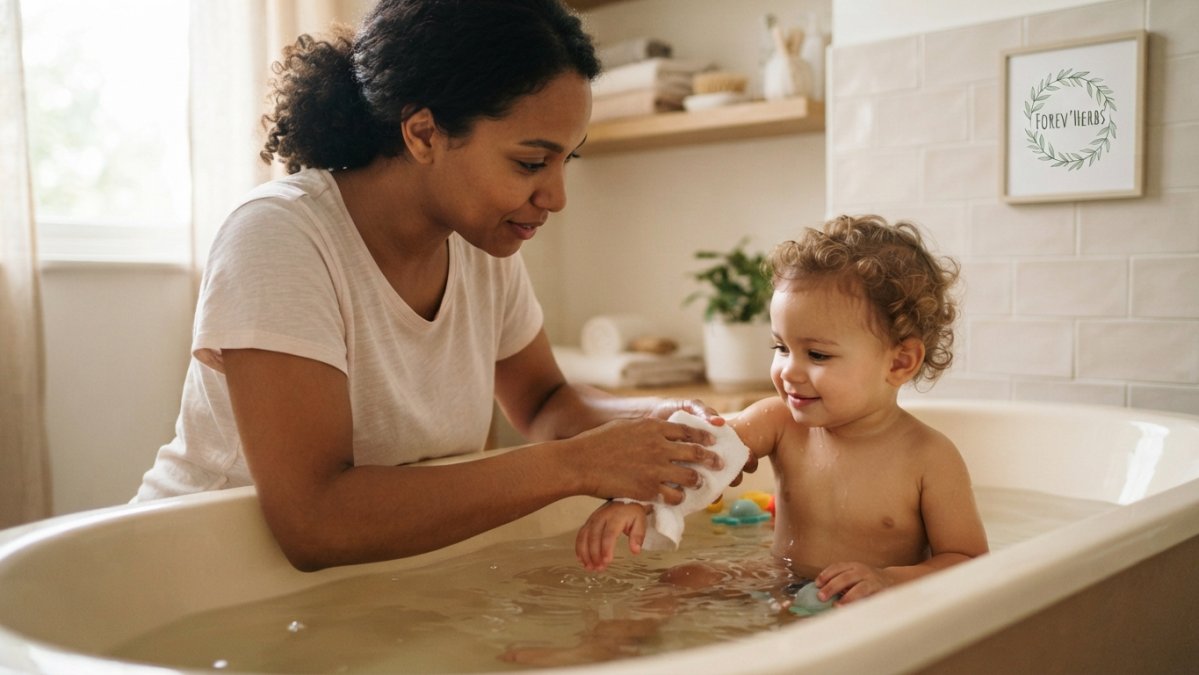
Our Unscented Oatmeal Handmade Soap includes goat milk and oatmeal.
Best Ointment for Kids' Rashes: Moisturizing and Protecting
Moisturizers do two jobs: they seal water into the skin and they rebuild the barrier that irritants pass through. For a child with irritated skin, the right product and the right application matter more than the brand name on the tub.
Choose the base by skin condition, not by label
A practical rule most dermatology practices share: the drier and more irritated the skin, the thicker the base should be. When a child's skin is flaring, step up to an ointment; when it is calm, a cream is usually enough.
Read the label like a gatekeeper
- Choose fragrance-free and dye-free products. "Unscented" can still contain masking fragrance, so look for "fragrance-free" specifically.
- Prefer short ingredient lists and avoid known irritants such as alcohol-heavy formulas on broken skin.
- For children with eczema, the National Eczema Association maintains a product directory that flags accepted moisturizers.
- Patch-test any new product on a small area of the inner forearm for 24 hours before applying it widely.
Apply the right amount at the right time
The most common mistake is applying too little, too infrequently. A useful benchmark is the fingertip unit: a strip of product from the tip of an adult index finger to the first crease covers roughly two adult palms. Scale down for a child's smaller body, but the principle holds: apply a visible layer, not a thin smear.
- Apply within 3 minutes of bathing, while skin is still damp, to trap water in.
- Apply 2-3 times daily at minimum; during a flare, more often.
- Apply downward strokes in the direction of hair growth rather than rubbing in circles, which can further irritate.
Ointment versus cream: the trade-offs
Our Eczema Cream contains refined shea butter, refined mango butter, organic calendula-infused organic extra virgin olive oil, organic tamanu oil, and colloidal oatmeal. The listing describes it as petroleum-free.

Age-aware cautions
Infants have thinner skin and greater surface area relative to body weight, so they absorb topical products more readily; use the plainest fragrance-free option and apply sparingly. Toddlers and older children can use richer ointments, but watch for heat rash under occlusive layers in warm weather. For any child, ask a pediatrician or pharmacist before adding an over-the-counter medicated cream to a moisturizing routine.
How Long Does a Rash Last in Children?
If a rash persists beyond 2 weeks or worsens despite home care, see your pediatrician. Some conditions require medical treatment and won't improve with home remedies alone.
When to See a Doctor for a Child's Rash
Most childhood rashes are mild and improve with gentle home care, but a small share signal something that needs a clinician the same day or emergency care immediately. The fastest way to decide is to sort what you are seeing into three buckets: home care, same-day call, and emergency.
Home care is reasonable when
- The rash is localized, mild, and your child is otherwise acting normally, eating, and sleeping
- There is itching but no spreading redness, warmth, pus, or fever
- You can identify a likely trigger (a new soap, detergent, fabric, or plant) and remove it
- The rash is improving or stable over 24-48 hours of gentle cleansing and moisturizing
Call the pediatrician the same day when
- Redness, swelling, or streaking spreads beyond the original area
- The area feels warmer than surrounding skin, or pus or honey-colored crust appears
- Your child has a fever alongside the rash
- Itching is severe enough to prevent sleep or normal play for more than a night or two
- The rash appeared after starting a new medication
- The rash does not improve after about 2 weeks of consistent home care
- Your child is under 3 months old and develops any rash
Seek emergency care immediately when
The American Academy of Pediatrics publishes guidance on recognizing serious rashes that need immediate medical attention. When in doubt, call your pediatrician's nurse line; describing the rash, your child's age, and any fever or behavior changes gives them enough to advise you.
Know when home care is enough and when your child needs medical attention by recognizing these key signs.
| Situation | Signs | Action |
|---|---|---|
| Home care is reasonable | Mild, localized rash; child acting normally | Continue gentle cleansing and moisturizing |
| Call pediatrician same day | Spreading redness, warmth, pus, or fever | Contact your pediatrician |
| Call pediatrician same day | Severe itching preventing sleep or play | Contact your pediatrician |
| Call pediatrician same day | Rash after starting new medication | Contact your pediatrician |
| Call pediatrician same day | Child under 3 months old with any rash | Contact your pediatrician |
| Seek emergency care | Serious rash requiring immediate attention | Call emergency services or go to ER |
Preventing Scratching and Further Skin Damage
Loose clothing prevents friction that triggers itching. Tight clothing traps heat and moisture, creating an environment where irritation worsens. Cotton breathes better than synthetic fabrics.
Building a Daily Skin Care Routine for Sensitive Skin
Our Twig - Joyful Lane Kids' Lotion is designed especially for kids. Its listing describes a light, non-greasy formula that absorbs quickly.

Forev'Herbs products are designed with sensitive children's skin in mind. Our Eczema Cream calms inflammation with botanical ingredients, while our Twig - Joyful Lane Kids' Lotion provides gentle daily hydration. Both are petroleum-free and crafted from high-quality natural ingredients. Start with consistent home care today, and watch your child's skin transform. The National Eczema Association confirms that early intervention with proper skincare routines significantly improves outcomes for children with sensitive skin conditions.
Frequently Asked Questions
What's the fastest way to soothe child skin irritation at home?
Cool compresses and colloidal oatmeal baths provide quick relief. Apply a cold wet cloth to irritated areas for 10-15 minutes, or dissolve colloidal oatmeal in lukewarm bathwater. Follow with a fragrance-free moisturizer while skin is still slightly damp. These methods calm inflammation and reduce itching without medication, making them ideal for immediate comfort.
Are home remedies for itchy eczema in children as effective as medication?
Home remedies work well for mild to moderate eczema and often prevent flare-ups when used consistently. Cool compresses, oatmeal baths, gentle cleansing, and natural moisturizers address the root cause, a compromised skin barrier. For severe eczema or when home care doesn't improve symptoms within a week, consult your pediatrician about topical treatments or other options.
How do I choose the best ointment for kids' rashes?
Forev'Herbs Eczema Cream ($15.99) includes colloidal oatmeal and botanical ingredients.
When should I see a doctor about my child's rash?
Contact your pediatrician if the rash spreads rapidly, shows signs of infection (pus, warmth, swelling), doesn't improve after 7-10 days of home care, or is accompanied by fever or difficulty breathing. Also seek medical advice if your child is scratching so intensely that they're causing bleeding or if the rash affects their sleep or daily activities.
