
Best Organic Skincare for Eczema: 2026 Guide

Table of Contents
- What Makes Organic Skincare for Eczema Different
- Natural Ingredients for Eczema Relief That Actually Work
- Ingredients to Avoid in Eczema Skincare
- An Eczema Skincare Routine for Sensitive Skin
- Choosing the Best Organic Eczema Cream for Babies
- Organic vs. Clinical: What You Actually Pay For
- Frequently Asked Questions
Last Updated: September 12, 2026
What Makes Organic Skincare for Eczema Different
Organic skincare for eczema is formulated to calm inflamed skin while avoiding the harsh additives that trigger reactions in the first place. We've watched families cycle through product after product because "gentle" on a label rarely means gentle on hypersensitive skin. The difference comes down to two things: how the formula supports the skin barrier, and what it leaves out.
Eczema, or atopic dermatitis, affects people of every age, and the condition disrupts the skin's ability to hold moisture and block irritants (niaid.nih.gov). An organic approach prioritizes plant-based emollients and humectants over synthetic thickeners, dyes, and heavy preservatives. That matters most for daily use, because anything applied twice a day for months becomes part of your skin's environment.
How Eczema Compromises the Skin Barrier
The skin barrier is the outer layer that keeps water in and irritants out. In eczema-prone skin, that lipid barrier is weaker, so transepidermal water loss rises and the skin dries, cracks, and itches. A compromised barrier also lets irritants and allergens penetrate more easily, which is why flare-up management depends on restoring barrier function, not just chasing the itch.
Why Steroid-Free Formulas Matter for Daily Use
Prescription steroids have a place in acute flare-ups, but they aren't designed for indefinite daily use. Steroid-free, fragrance-free moisturizers can be applied as often as needed to maintain hydration between flares. For most families managing eczema long term, the daily workhorse is a gentle emollient, not a medicated cream.
Natural Ingredients for Eczema Relief That Actually Work
The most effective natural ingredients for eczema relief fall into three groups: colloidal oatmeal for itch and redness, ceramides and fatty acids to rebuild the lipid barrier, and humectants like glycerin to pull water into the skin. A formula that combines all three tends to outperform a single-ingredient product.
Colloidal Oatmeal, Ceramides, and Humectants
Colloidal oatmeal is one of the few botanicals with a long track record for soothing irritation and supporting skin hydration. Ceramides, the fats naturally found between skin cells, help restore the barrier. Humectants attract and hold water. Together they address both the dryness and the itch that drives scratching.
Botanical Extracts and Anti-Inflammatory Oils
Plant oils rich in fatty acids, such as sunflower and jojoba, act as occlusives that seal in moisture. Botanical extracts with anti-inflammatory properties, including chamomile and calendula, can help soothe redness. The catch: even natural ingredients can trigger reactions, so patch test before committing.
Ingredients to Avoid in Eczema Skincare
Common triggers to skip include synthetic fragrance, essential oils in high concentrations, alcohol-based toners, and harsh surfactants like sulfates. "Fragrance-free" is not the same as "unscented," since unscented products may still contain masking fragrances. Look for short ingredient lists, hypoallergenic claims, and a fragrance-free label you can trust.
| Ingredient to Avoid | Why It Triggers Eczema | Better Alternative |
|---|---|---|
| Synthetic fragrance | Common allergen, irritates hypersensitive skin | Fragrance-free botanical formulas |
| Sulfates | Strip natural oils, weaken barrier | Gentle plant-based cleansers |
| Drying alcohols | Accelerate water loss | Glycerin-based humectants |
| Essential oils (high dose) | Can cause contact reactions | Colloidal oatmeal, chamomile |
An Eczema Skincare Routine for Sensitive Skin
A workable eczema skincare routine for sensitive skin is short: cleanse gently, moisturize while damp, and reapply during the day. Consistency beats complexity, and fewer products mean fewer chances for irritation. What most routines get wrong is treating every day the same. A maintenance routine and a flare-up routine are two different protocols, and mixing them up is why so many families feel like nothing works.
The Maintenance Routine (Skin Is Calm)
- Cleanse with lukewarm water, not hot, and a fragrance-free, non-comedogenic wash. Keep showers under 10 minutes; long exposure to water strips the lipid barrier even when the water is lukewarm.
- Pat dry with a soft towel, leaving skin slightly damp. Do not rub.
- Moisturize within three minutes with an emollient-rich cream or ointment. This window matters because damp skin absorbs and traps water far more effectively than dry skin.
- Reapply two to three times daily, and always after handwashing. Hands are the most frequently washed and least frequently moisturized part of the body.
- Protect with soft, breathable fabrics, cotton and bamboo, and keep wool and rough synthetics off the skin entirely, not just as a first layer.
The Flare-Up Routine (Skin Is Red, Itchy, or Weeping)
When skin is actively inflamed, the goal shifts from maintenance to calming. A common pattern practitioners recommend:
- Shorten, cool, and reduce frequency of baths. Lukewarm or slightly cool water, no more than once daily during a flare.
- Skip exfoliants, scrubs, and anything with fragrance or essential oils until the skin settles.
- Switch to an ointment texture rather than a lotion. Ointments are the most occlusive and seal in moisture with the fewest added ingredients, which matters when the barrier is at its weakest.
- Apply a thicker layer and consider covering the area with soft cotton (wet-wrap style) if your clinician has shown you how.
- Do not introduce new products during a flare. You will not be able to tell whether a reaction is the flare or the new product.
Cream vs. Ointment vs. Lotion: Which Texture, When
Texture is the most overlooked variable in eczema routines. Lotions are mostly water and evaporate quickly, fine for maintenance on mildly dry skin, weak for a compromised barrier. Creams balance water and oil and are the everyday workhorse for most people. Ointments are almost entirely oil or petrolatum-based and are the most occlusive option; they are the standard recommendation for very dry, cracked, or actively flaring skin, and for overnight use. Many dermatologists suggest an ointment at night and a cream during the day, when greasiness is less practical.
Adjusting for Age and Severity
Infant skin is thinner and loses water faster, so infants generally need the simplest formulas and the most frequent reapplication, often at every diaper change (PubMed). Toddlers and school-age children who are mobile and exposed to more irritants can handle slightly richer creams. Adults managing chronic eczema on the hands or face often need a different texture for each area: a lighter cream for the face, a heavier ointment for hands that are washed constantly. If skin is not improving after two to four weeks of consistent routine, that is a signal to bring in a clinician rather than to keep adding products.
Patch Testing Before You Commit
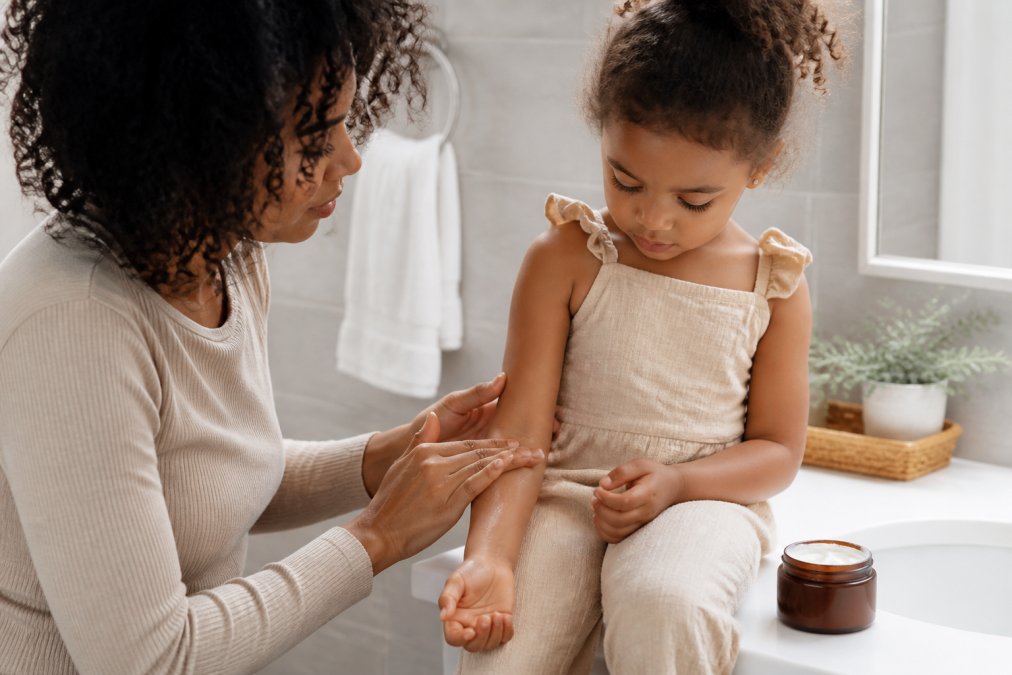
Patch testing is the step most people skip, and it's the one that prevents a week of misery. Apply a small amount to the inner forearm, cover it, and wait 48 hours (the American Academy of Dermatology). If there's no redness or itching, test again on a small area of the affected skin before full use.
Choosing the Best Organic Eczema Cream for Babies
The best organic eczema cream for babies is fragrance-free, petroleum-free, and built around colloidal oatmeal or ceramides rather than essential oils. Infant skin is thinner and absorbs more, so fewer ingredients is genuinely safer.
Age matters here. Newborns and infants need the simplest formulas, while toddlers who are mobile and exposed to more irritants can handle slightly richer creams. Forev'Herbs' children's line, TWIG, offers gentle, plant-based care without petroleum or synthetic fragrance. When comparing options, check for dermatologist-tested claims, a non-comedogenic formula, and transparent sourcing.
Organic vs. Clinical: What You Actually Pay For
Organic products often cost more, and the honest answer is that you're paying for ingredient sourcing, smaller batch production, and certification. Clinical brands may invest more in lab testing and standardized actives. Neither approach is automatically better; the right choice depends on your skin and your budget. But "it depends" is not a buying guide. Here is the framework most families actually need.
What Drives the Price of an Organic Product
Four cost centers explain most of the gap between a drugstore lotion and a certified organic cream:
- Ingredient sourcing. Certified organic botanicals cost more per pound than conventional ones, and small brands cannot negotiate the volume discounts that large manufacturers can.
- Batch size. Small-batch production means less automation, more hands-on labor per unit, and higher per-unit overhead.
- Certification. Third-party organic and natural certifications carry annual fees and audit costs that get folded into the retail price.
- Preservation and packaging. Avoiding synthetic preservatives often means shorter shelf life, smaller runs, and more frequent production, all of which raise cost.
None of those costs guarantee a better outcome for your skin. They guarantee a different supply chain and a different formulation philosophy.
What Clinical and Medical-Grade Products Offer
Clinical and medical-grade products tend to invest in standardized active concentrations, stability testing, and clinical trials. That means the amount of an active ingredient in the jar is consistent from batch to batch, which matters when you are relying on a specific ingredient to do a specific job. Prescription treatments, including topical corticosteroids and non-steroid options like topical calcineurin inhibitors, sit in a separate category entirely: they are regulated drugs with demonstrated efficacy for active flares, and they are not interchangeable with any over-the-counter moisturizer, organic or otherwise.
A Decision Framework: When Organic Is Enough, and When It Isn't
Use this as a rough guide, not a substitute for medical advice:
- Mild, dry, itchy skin between flares → an organic, fragrance-free emollient is often sufficient as the daily workhorse.
- Chronic maintenance after a flare has resolved → organic barrier creams work well as long as they are fragrance-free and free of high-dose essential oils.
- Active, weeping, infected, or rapidly spreading flare → see a clinician. No moisturizer, organic or clinical, treats infection or replaces a prescription.
- Skin that has not improved after two to four weeks of consistent routine → that is a clinical question, not a product question.
- Infants under 3 months with any rash → call a pediatrician before experimenting with any new product.
The Honest Cost-Benefit Read
The most expensive cream is not the most effective one, and the cheapest is not automatically the safest. A certified organic product with transparent sourcing gives you a clear chain from plant to jar, which is often what the price reflects. A clinical product gives you standardized actives and batch consistency. Many families end up using both: an organic, fragrance-free moisturizer for daily maintenance, and a clinician-prescribed treatment for flares. That combination is not a compromise, it is the routine most dermatologists actually recommend.
Frequently Asked Questions
What are the best natural skincare products for eczema?
The best options combine colloidal oatmeal, ceramides, and plant-based oils that restore the lipid barrier without fragrance or harsh preservatives. Look for steroid-free formulas labeled fragrance-free and hypoallergenic, since these reduce the risk of skin irritation on hypersensitive skin. Products rich in fatty acids and humectants help reduce transepidermal water loss and soothe redness during flare-up management. Patch test any new product on a small area for 48 hours before applying it more broadly, especially on children.
Are organic skincare products safer for eczema?
Organic formulas often skip synthetic fragrances, dyes, and certain preservatives that trigger reactions in eczema-prone skin. That said, natural does not automatically mean safe. Some botanical extracts and essential oils can still cause irritation. The key is checking for fragrance-free, hypoallergenic, and dermatologist-tested labels, and confirming the product supports skin barrier function rather than stripping it. Certified natural businesses that disclose sourcing and third-party testing give you more confidence than vague marketing claims.
What is the best organic eczema cream for babies?
For babies, choose petroleum-free creams with colloidal oatmeal, ceramides, and calming agents like chamomile or calendula. Avoid any product containing fragrance, alcohol, or essential oils in high concentrations. Apply within three minutes of a lukewarm bath to lock in skin hydration while the skin is still damp. Test on a small patch of the inner arm first, and stop use if redness or itching increases. Gentle, plant-based formulas designed for infant skin are the safest starting point.
How do I patch test organic skincare for eczema?
Apply a small amount of the product to a quarter-sized area on your inner forearm or behind the ear. Wait 48 hours and check for redness, itching, or swelling. If no reaction appears, repeat the test on a small area of the affected skin before using it more widely. Patch testing is especially important with botanical extracts, since plant-based ingredients can vary in concentration. Keep a note of which ingredients you react to so you can avoid them in future products.