
Botanical Ingredient Sourcing Standards: A Complete Guide

Table of Contents
- What Are Botanical Ingredient Sourcing Standards?
- Botanical Ingredient Quality Standards and Verification
- Botanical Ingredient Traceability: Chain of Custody and Documentation
- Botanical Supplier Verification and Qualification
- Sustainable Botanical Sourcing Practices
- Why These Standards Matter for Your Wellness
- Frequently Asked Questions
Last Updated: October 12, 2026
What Are Botanical Ingredient Sourcing Standards?
Botanical ingredient sourcing standards are the specifications, testing protocols, and documentation requirements that ensure herbal and plant-based ingredients meet quality, safety, and authenticity benchmarks before use in finished products.
These standards cover where a plant is grown, how it's tested for contaminants, verified for identity, and tracked from origin to your hands.
Standards matter because botanical ingredients vary wildly. Two batches of lavender from different suppliers can have different potency levels, pesticide residues, or even different species mixed in.
Botanical Ingredient Quality Standards and Verification
Quality standards define what "acceptable" actually means for a botanical ingredient. This includes identity verification (confirming you have the right plant species), purity testing (checking for contaminants), and potency assessment (measuring active compounds).
Identity and Authenticity Testing
Identity testing confirms that an ingredient is exactly what the supplier claims it is. Without it, suppliers could substitute cheaper plants or mix species together undetected.
Many suppliers rely on visual inspection alone, assuming the dried herb is correct.
Authenticity goes beyond species verification. It also checks whether the ingredient was harvested at peak potency, dried properly, and stored to preserve its active compounds.
Purity and Contamination Screening
Purity testing identifies unwanted substances: pesticide residues, heavy metals, mold, bacteria, and foreign plant material. Many suppliers cut corners here because testing is expensive and time-consuming.
Common contaminants in botanical ingredients include:
- Pesticide residues from agricultural use
- Heavy metals like lead and cadmium absorbed from soil
- Aflatoxins, a carcinogenic compound produced by mold (the FDA)
Testing standards vary by ingredient type and intended use: topical skincare has different acceptable limits than internal consumption. A supplier should be transparent about which tests they run and what the results show.
Botanical Ingredient Traceability: Chain of Custody and Documentation
Traceability means you can follow an ingredient backward from the finished product to the exact farm or wild harvesting location where it originated. This requires documentation at every step: cultivation records, harvest dates, processing logs, storage conditions, and testing results.
Most sourcing guides stop at that definition, missing the mechanics: how a lot number moves through the chain, where custody transfers happen, and what evidence proves geographic origin. Without those mechanics, traceability is a promise, not a system.
The Chain of Custody, Step by Step
A chain of custody is the unbroken record of who held the material, when, and under what conditions. For botanical ingredients, custody typically transfers at these points:
- Harvest or collection, The grower or wild harvester assigns a harvest lot ID tied to a specific field, plot, or collection site. Records include date, method (hand-picked, mechanical), and weather conditions.
- Primary processing, Washing, drying, milling, or extraction. The processor logs input lot IDs, output lot IDs, equipment used, and yield. This is where commingling risk is highest.
- Bulk storage, Temperature, humidity, and duration are logged. Pest control treatments and any fumigation must be documented.
- Export or transfer, Shipping documents, bills of lading, and customs records tie the lot to a physical shipment. Seals and container numbers should match.
- Importer or distributor receipt, Incoming inspection confirms seal integrity, lot ID continuity, and condition on arrival.
- Manufacturing, The finished product batch record references every input lot ID, so a finished good can be traced back to each source.
At each transfer, the receiving party should verify that the lot ID on the paperwork matches the one on the container. A missing lot ID, relabeled drum, or mismatched seal is a traceability failure.
Origin Verification: What Actually Counts as Proof
Geographic origin claims are easy to make and hard to prove. A supplier saying "sourced from the Mediterranean" is not evidence. What counts as origin evidence depends on the claim:
- Country of harvest, Customs records, phytosanitary certificates, and export declarations.
- Region or appellation, Grower affidavits, cooperative records, and sometimes stable isotope testing or DNA fingerprinting for high-value botanicals.
- Specific farm or wild site, GPS coordinates, farm maps, harvest logs signed by the grower, and third-party audit reports.
- Wild vs. cultivated, Collection permits, land-use agreements, and harvester training records.
Origin documentation often exists for the first transfer but degrades downstream, by the time material reaches a distributor, farm-level records may be a photocopy of a photocopy. Buyers should require origin evidence traceable to the original issuer and consistent lot IDs across every document.
Lot-Level Records: What to Require
A workable traceability system needs, at minimum:
- A unique lot ID assigned at harvest and carried through every subsequent document
- A batch record that maps every input lot to every output lot
- Testing certificates tied to the specific lot, not a generic product name
- Storage and handling logs with dates, temperatures, and any deviations
Traceability is not a document you file, it is a chain you can walk. If you cannot pick a finished product, read its batch record, and arrive at a named farm or collection site without gaps, the chain is broken.
Without traceability, a supplier cannot prove the ingredient came from where they claim. With it, you can investigate any contamination, adulteration, or potency issue and identify exactly where in the supply chain it occurred.
Documentation also enables recalls: if an ingredient is contaminated, companies with proper traceability can identify affected batches and customers. Without it, a recall becomes a guessing game.
Botanical Supplier Verification and Qualification
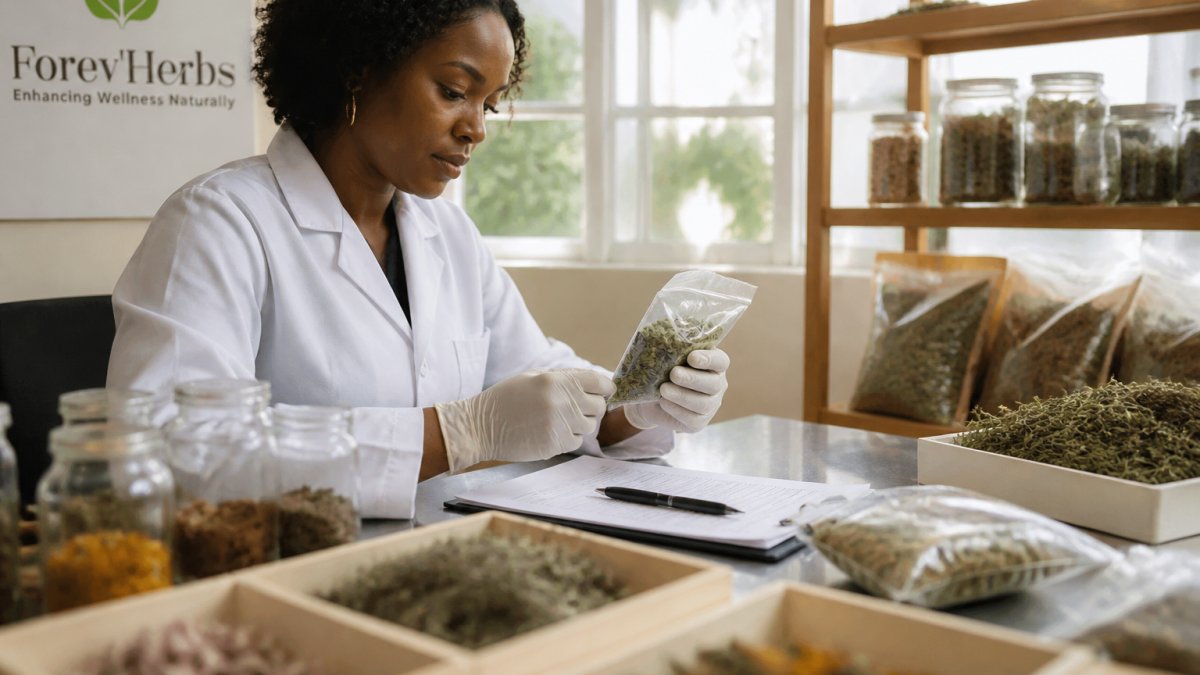
Choosing the right supplier is where sourcing standards begin. A supplier's willingness to meet standards, share testing data, and undergo audits reveals their commitment to quality. Qualification is not one-time, it's a cycle of assessment, approval, monitoring, and requalification.
The Supplier Qualification Framework
A practical qualification process has four stages:
1. Paperwork review. Before any audit, request the supplier's quality manual, certificates of analysis (COAs) for recent lots, certifications, and a questionnaire covering facility, capacity, and traceability. Red flags: missing COAs, COAs listing only "typical" values instead of lot-specific results, and vague answers about origin.
2. Risk assessment. Not every supplier needs the same scrutiny. A risk-based approach scores suppliers on:
- Ingredient criticality (does it carry a high adulteration or contamination risk?)
- Supply-chain complexity (how many hands does the material pass through?)
- Regulatory exposure (is the ingredient subject to import alerts or restricted use?)
- Historical performance (complaints, recalls, test failures)
High-risk suppliers warrant on-site audits and more frequent testing. Low-risk suppliers may qualify on documentation alone, with periodic re-review.
Lavender Organic Whipped Sugar Scrub →
3. On-site audit. A thorough audit checks whether the supplier does what they claim, verifying:
- Facility cleanliness and pest control
- Equipment calibration and maintenance records
- Staff training on handling and storage
- Traceability documentation system
Auditors should score each area and document findings, using a pass/fail or tiered rating (approved, approved with conditions, not approved) so the decision is transparent.
4. Approval and specification. Once approved, the supplier is tied to a written specification that defines identity, purity, potency, and testing requirements for each ingredient.
Ongoing Monitoring and Corrective Actions
Many companies audit once and call it done. That's insufficient. Sourcing standards require ongoing monitoring, repeat audits, regular batch testing, and periodic documentation reviews, to catch drift, since a supplier that maintains standards one year might cut corners the next.
Monitoring includes:
- Every-lot testing against the approved specification
- Periodic re-audits at a frequency set by the risk score
- Complaint and deviation tracking, any out-of-spec result triggers an investigation
- Corrective and preventive action (CAPA), the supplier must document root cause, corrective steps, and preventive measures
When a supplier fails a test or an audit, the response should be proportional. A minor documentation gap may require a corrective action plan with a deadline.
Requalification Triggers
A supplier's approval should not be permanent. Requalification is triggered by:
- A change in ownership, facility, or key personnel
- A change in raw material source or processing method
- A significant test failure or recall
- A gap in audit frequency (e.g., no audit in 24 months for a high-risk supplier)
A supplier who resists audits, delays sharing COAs, or cannot explain where material comes from is a liability regardless of price. The cost of a contamination event, recall, regulatory action, and reputational damage, far exceeds any savings from a cheaper, less transparent source.
The suppliers worth trusting are those who invite audits, share testing data openly, and can explain their sourcing story in detail. If a supplier is evasive about where ingredients come from or what testing they have done, that is a signal to look elsewhere.
Sustainable Botanical Sourcing Practices
Sustainable sourcing means obtaining botanical ingredients in ways that don't deplete ecosystems, exploit workers, or damage the environment. This is both an ethical imperative and a practical one, unsustainable sourcing creates supply risk.
Cultivation Methods and Wild Harvesting
Cultivated botanicals come from farms where the plant is intentionally grown, harvested, and replanted. This allows quality control, consistency, and scalability, and is more sustainable than wild harvesting because it doesn't deplete natural populations.
Cultivation methods matter: regenerative agriculture builds soil health and biodiversity, conventional agriculture relies on synthetic pesticides and fertilizers, and organic cultivation avoids synthetic chemicals but still requires proper soil management.
Wild harvesting, collecting plants from natural ecosystems, can be sustainable if done responsibly, but it's the highest-risk method.
Responsible wild harvesting requires:
- Harvest quotas that ensure plant populations regenerate
- Training for harvesters on proper collection techniques
- Seasonal restrictions that protect reproductive cycles
- Community agreements with local stakeholders
Ethical Sourcing and Biodiversity
Ethical sourcing ensures that the people growing and harvesting botanical ingredients are paid fairly, work in safe conditions, and have a say in how their land is used. This includes fair-trade practices, community benefit agreements, and respect for indigenous knowledge.
Biodiversity protection means sourcing in ways that preserve plant and animal species in growing regions. Monoculture depletes soil and reduces biodiversity, while diverse farming systems maintain ecosystem health and resilience.
Many suppliers now seek certifications verifying sustainable and ethical practices. These add cost but provide independent verification that sourcing meets standards.
Why These Standards Matter for Your Wellness
When you choose a product with botanical ingredients, you're trusting that they're safe, effective, and actually what the label says. Sourcing standards make that trust justified.
At Forev'Herbs, we take sourcing seriously because you're using our products on your skin and your family's skin. Our Lavender Organic Whipped Body Butter is formulated with carefully sourced organic lavender and other botanicals that meet rigorous quality standards.

The standards we follow aren't just marketing, they're the difference between a product that works and one that doesn't, between a brand that's transparent and one that's hiding something.
Sourcing standards for botanical ingredients aren't just industry jargon, they're your assurance that what you're buying is safe, effective, and ethically produced. Explore our products and discover the difference that real sourcing standards make.
Frequently Asked Questions
How can you verify the quality of a botanical ingredient?
Quality verification involves multiple steps: identity testing confirms the plant species is correct, purity testing screens for contaminants like heavy metals and pesticide residues, and potency testing measures the active phytochemical profile. Request certificates of analysis from your supplier, ask about third-party testing, and verify that batches are tested to documented specifications. Reputable suppliers provide lot-specific documentation showing test results before ingredients reach your finished product.
Why is traceability important when sourcing botanical ingredients?
Traceability establishes a documented chain of custody from the plant's origin through cultivation, harvest, processing, and final use in your product. This prevents adulteration, allows rapid identification of contamination sources, and ensures you know exactly where your ingredients came from. Traceability also supports ethical and sustainable claims, letting you verify that suppliers follow responsible harvesting and labor practices throughout the supply chain.
What does responsibly sourced mean for botanical ingredients?
Responsibly sourced botanical ingredients meet standards for environmental sustainability, fair labor practices, and community benefit. This includes controlled cultivation that avoids over-harvesting wild species, compliance with biodiversity conservation, fair wages and safe working conditions for farmers, and transparent documentation of sourcing practices. Look for certifications like Fair Trade, organic status, and third-party sustainability audits to verify responsible sourcing claims.
What information should a botanical supplier provide?
A transparent botanical supplier should provide certificates of analysis showing identity, purity, and potency test results; documentation of geographic origin and harvest dates; information about cultivation or wild harvesting methods; details on processing and storage conditions; and evidence of compliance with relevant quality standards. They should also be willing to discuss their sourcing practices, supplier relationships, and any third-party audits or certifications they hold.