
Safest Non-Toxic Baby Skincare Guide

Table of Contents
- Why Non-Toxic Baby Skincare Matters
- Harmful Chemicals in Baby Lotion to Avoid
- How to Read Baby Skincare Ingredient Labels
- Best Organic Skincare for Eczema
- Understanding Product Certifications and Labels
- Building a Safe Baby Skincare Routine
- Frequently Asked Questions
Last Updated: September 28, 2026
Why Non-Toxic Baby Skincare Matters
Your baby's skin is thinner and more permeable than an adult's, which means whatever you apply absorbs faster and deeper. This makes choosing non-toxic baby skincare not just a preference, it's a fundamental health decision. Babies lack the liver and kidney function to process and eliminate certain chemicals efficiently, so ingredients that an adult body might handle can accumulate in an infant's system over time (Principles of Pediatric Environmental Health).
Many parents don't realize that conventional baby products often contain ingredients linked to hormone disruption, skin irritation, and long-term sensitivity issues. Many parents don't realize that "baby-safe" marketing claims don't always match what's actually in the bottle.
Non-toxic baby skincare supports your child's developing microbiome by preserving beneficial bacteria that protect skin health. Fragrance-free, chemical-light formulas let your baby's skin develop naturally and build its own defense system.
Harmful Chemicals in Baby Lotion to Avoid
Certain ingredients show up repeatedly in conventional baby products. Many sound harmless until you understand what they actually do.
Parabens are synthetic preservatives that mimic estrogen in the body and accumulate over time. Even "paraben-free" claims sometimes hide parabens under different names, so check the full ingredient list.
Phthalates are plasticizers and endocrine disruptors linked to reproductive and developmental issues (the EPA). Manufacturers hide them under the catch-all term "fragrance" or "parfum."
Sulfates strip natural oils from skin, leaving the barrier compromised. Sodium lauryl sulfate and sodium laureth sulfate are common culprits in baby washes and shampoos.
Synthetic fragrance is a red flag, a single "fragrance" ingredient can contain dozens of undisclosed chemicals. Fragrance-free products eliminate this entire category of hidden irritants.
Dimethicone and other silicones coat skin, trapping moisture but also bacteria and sweat underneath, which can trigger eczema flares.
Volatile organic compounds (VOCs) evaporate into the air and irritate respiratory systems. They're often found in scented baby products.
How to Read Baby Skincare Ingredient Labels
Decoding Label Claims
The ingredient list is ordered by concentration, highest first. The first three to five ingredients make up the bulk of what your baby is actually getting.
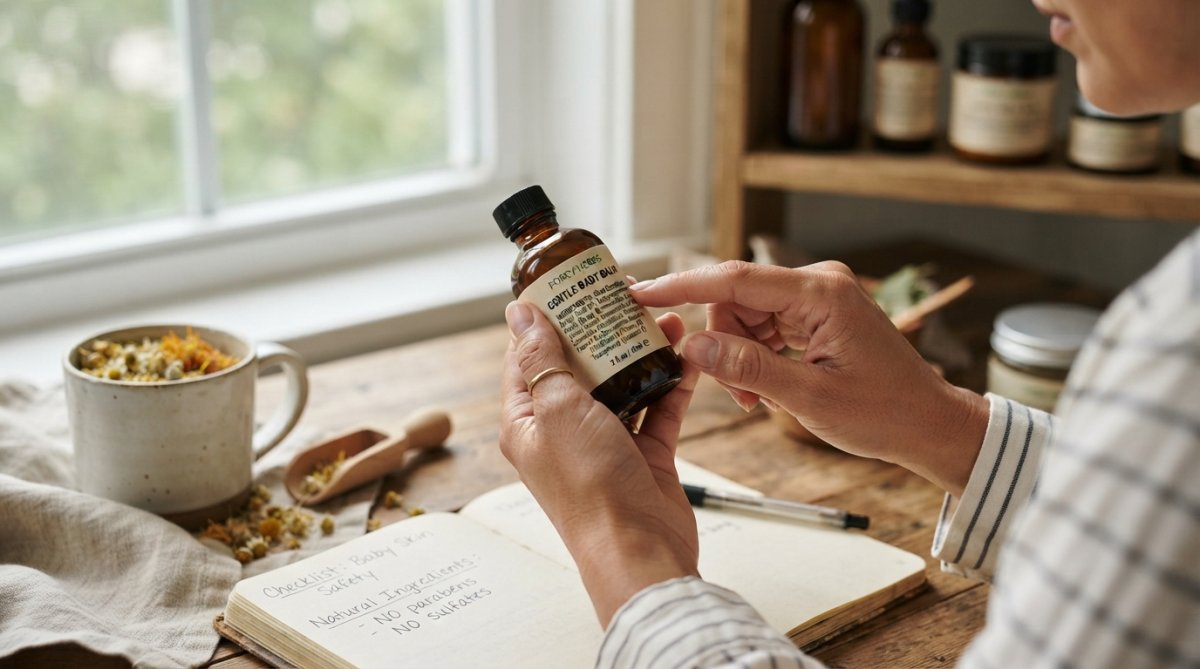
Red flags include "fragrance," "parfum," "flavor," "natural flavor," or "natural fragrance", code for undisclosed chemicals.
Check for certifications on the label. "Hypoallergenic" is unregulated; "dermatologist-tested" just means a dermatologist looked at it. Real certifications come from third-party bodies that audit ingredients and manufacturing.
Manufacturers sometimes use Latin or chemical nomenclature to obscure irritants. "Cetyl alcohol" sounds synthetic but is plant-derived; "phenoxyethanol" is synthetic despite sounding botanical. Cross-reference unfamiliar names against a trusted ingredient database.
Patch Testing Protocols for New Products
Before applying any new skincare product to your baby's face or body, patch test it first. This simple step catches reactions early and prevents widespread irritation.
The 48-Hour Patch Test Protocol:
-
Choose the test site: Apply a small amount (the size of a pea) to the inside of your baby's wrist or behind the ear, areas with thin, sensitive skin that show reactions quickly.
-
Apply once and wait: Use the product only once. Do not reapply during the 48-hour window.
-
Avoid confounding factors: Do not bathe the test area, expose it to direct sunlight, or apply other products nearby for the full 48 hours.
-
Observe at 24 and 48 hours: Check the patch at 24 and 48 hours. Document redness, swelling, itching, warmth, weeping, or texture changes.
-
Interpret results: No reaction = safe to introduce gradually. Mild redness that fades within an hour = likely not a concern. Persistent redness, swelling, itching, or oozing = allergic reaction; discontinue immediately.
Why 48 hours matters: Most immediate allergic reactions appear within 15 minutes to 4 hours. Delayed contact dermatitis peaks between 24 and 72 hours.
Special considerations for eczema-prone skin: If your baby has active eczema or a history of sensitive reactions, extend the observation window to 72 hours and patch test on calm skin, not inflamed areas.
Unscented Castile Goat Milk Handmade →
Introducing products after a clean patch test: Once a product passes, use it on a small area for 3-5 days, then gradually expand to catch delayed reactions.
When patch testing isn't enough: If your baby has severe eczema, multiple known allergies, or a history of anaphylaxis, consult your pediatrician or pediatric dermatologist before introducing new products.
Best Organic Skincare for Eczema
Eczema in babies demands a different approach. The compromised skin barrier loses moisture faster and lets irritants in easier. You need products that actively repair and protect.
Look for colloidal oatmeal, shea butter, organic calendula, and zinc oxide. Avoid fragrance and essential oils, which can irritate eczema-prone skin.
The Forev'Herbs Eczema Cream combines refined shea butter, mango butter, organic calendula-infused organic extra virgin olive oil, organic castor oil, organic tamanu oil, organic jojoba oil, zinc oxide, colloidal oatmeal, vitamin E, organic arrowroot, and organic rosemary CO2 extract. This formula is crafted to calm irritation and dryness at the source, nourishing and strengthening your skin’s barrier while easing the itch and discomfort caused by eczema and chronic dryness.
For cleansing eczema-prone skin, use the Unscented Castile Goat Milk Handmade Soap. The gentle, moisturizing properties of goat milk, combined with the mild cleansing nature of Castile soap, help soothe irritation, hydrate the skin, and maintain its natural pH balance.

| Product | Key Ingredients | Best For | Price |
|---|---|---|---|
| Eczema Cream | Shea butter, calendula, tamanu oil, zinc oxide, oatmeal | Active eczema relief | $15.99 |
| Castile Goat Milk Soap | Goat milk, olive oil, Castile base | Gentle daily cleansing | $6.75 |
| Shea Handmade Soap | Shea butter, olive oil, coconut oil | General sensitive skin | $6.75 |
Understanding Product Certifications and Labels
Real certifications come from independent third-party auditors. Not all certifications carry equal weight, and some create hidden trade-offs.
Certifications That Matter
USDA Organic Certification means ingredients were grown without synthetic pesticides, herbicides, or fertilizers, and the product was manufactured under strict handling standards.
NSF/ANSI 305 Certification (Natural and Organic Personal Care Products Standard) audits ingredients, manufacturing processes, and claims. It's more rigorous than self-certification but less well-known than USDA Organic. Products with this certification have been tested for heavy metals, microbial contamination, and ingredient authenticity.
EWG Verified (from the Environmental Working Group) means a product has been screened against the EWG's ingredient hazard database and meets transparency standards.
Certifications That Sound Official But Aren't
Dermatologist-tested is marketing language with no regulatory definition. It means a dermatologist examined the product, not that they approved it, recommended it, or verified its safety. Dermatologists test thousands of products annually; the label tells you nothing about the outcome.
The Regulatory Gap: Why Certifications Exist in the First Place
However, certifications vary wildly in rigor. USDA Organic requires ongoing audits and carries legal enforcement. EWG Verified is a screening tool, not a guarantee. Some certifications are awarded once and never re-audited. When evaluating a product, ask: Does this certification require ongoing compliance, or was it awarded once? Is there a regulatory body enforcing it, or is it self-policed?
Fragrance-Free vs. Unscented: A Critical Distinction
Fragrance-free means no fragrance ingredients were added to the formula. This is what you want for baby skincare.
The Sustainability vs. Safety Trade-Off
Conversely, some synthetic preservatives (like phenoxyethanol) are highly effective at preventing contamination with minimal concentration, which means less chemical exposure per use, but they're still synthetic. There's no perfect answer here. Decide what matters most to your family: maximum natural ingredients, longest shelf stability, or minimal preservative load. Then choose products aligned with that priority, understanding the trade-offs.
Regional Differences in Safety Standards
For baby skincare, stick to products formulated and certified within the US market, where labeling is transparent and third-party certifications are more common. If a product is imported, verify that it meets US ingredient standards, not just the standards of its country of origin.
Building a Safe Baby Skincare Routine
Start minimal. Your baby doesn't need ten products. Babies need: a gentle cleanser, a moisturizer, and sun protection. Everything else is optional.
Frequently Asked Questions
What ingredients should I avoid in baby skincare products?
Avoid parabens, phthalates, sulfates, synthetic fragrance, and volatile organic compounds in baby skincare. These can disrupt the skin barrier and microbiome. Look for products that list botanical ingredients and avoid petroleum-derived components whenever possible.
How can I tell if a baby skincare product is truly non-toxic?
Look for ingredient transparency, reputable brands list every component clearly. Verify certifications such as Silver Certified Natural Business status. Avoid greenwashing by researching the brand's sourcing practices and environmental commitments.
Are organic baby skincare products safer than conventional ones?
The key is reading ingredient lists carefully and choosing products formulated specifically for sensitive, baby skin rather than relying solely on the organic label.
What does dermatologist-tested mean for baby products?
Dermatologist-tested means a dermatologist evaluated the product. For babies with eczema or sensitive skin, products tested specifically on reactive skin types offer more assurance than general dermatologist testing.
How do I patch test a new baby skincare product safely?
Apply a small amount of the product to a discrete area of your baby's skin, such as behind the ear or on the inner arm. Wait 24 to 48 hours and monitor for redness, swelling, itching, or rash. If no reaction occurs, gradually introduce the product into your baby's routine. For babies with severe eczema or known sensitivities, consult your pediatrician before testing new products. Keep detailed notes of which products cause reactions to avoid them in the future.
What makes a baby skincare product microbiome-friendly?
Microbiome-friendly products support your baby's skin's natural bacterial balance rather than stripping it away. These formulas avoid harsh sulfates and preserve the skin barrier. Ingredients like colloidal oatmeal, plant-based oils, and botanical extracts nourish without disrupting beneficial bacteria. Products free from synthetic fragrance and preservatives are gentler on the microbiome. This approach reduces irritation and supports long-term skin health, especially important for babies prone to eczema or contact dermatitis.
How do sustainability and safety balance in baby skincare choices?
The best baby skincare balances both: look for brands using sustainable sourcing practices and eco-friendly packaging while maintaining strict ingredient safety standards. Fair-trade, organic ingredients reduce environmental impact without compromising purity. Brands with environmental certifications like Green Business status demonstrate commitment to both. Choose concentrated formulas in minimal packaging to reduce waste while keeping safety paramount.