
Signs of Synthetic Fragrance in Skincare: A Practical Guide

Table of Contents
- What Synthetic Fragrance Means on a Skincare Label
- How to Read Skincare Ingredient Labels for Fragrance
- Synthetic versus Natural Fragrance: Key Differences
- Fragrance Allergy Symptoms and Skin Reactions
- Alternative Names for Fragrance in Skincare
- Choosing Fragrance-Free Skincare Products
- Frequently Asked Questions
Last Updated: October 15, 2026
What Synthetic Fragrance Means on a Skincare Label
Flip over a skincare bottle and you'll often see "fragrance" in the ingredients. Fragrance on a skincare label refers to synthetic scent compounds added to make the product smell appealing. These are often lab-created chemicals designed to smell like flowers, citrus, or other pleasant scents, not the natural essential oils you might imagine.
Understanding the signs of synthetic fragrance in skincare matters because it affects how your skin responds: some tolerate it fine, while others experience irritation, redness, or allergic reactions. We believe transparency about what goes on your skin is essential, especially for sensitive or reactive skin.
Fragrance versus Parfum: Reading the Label Difference
Here's where label reading gets tricky: fragrance and parfum are not the same thing, even though they're both scent ingredients. The difference comes down to concentration.
"Fragrance" is a catch-all term for a blend typically containing 2-5% fragrance compounds mixed with alcohol and other carriers.
The tricky part: both terms hide the actual fragrance ingredients. Manufacturers don't have to list what's inside the blend, so many people with sensitive skin avoid both entirely.
Why Fragrance Appears in Skincare Products
Fragrance gets added to skincare for one simple reason: it makes the product more appealing to use. A moisturizer that smells like roses feels more luxurious than one that smells like nothing.
Some fragrance compounds do have mild preservative or antioxidant properties, and manufacturers use this to justify fragrance in products marketed as "natural" or "botanical." But the reality is that most fragrance in skincare is there for marketing, not function.
How to Read Skincare Ingredient Labels for Fragrance
Spotting fragrance on an ingredient label is straightforward once you know what to look for. Ingredients are listed in descending order by weight, so fragrance typically appears toward the end, but its position does not determine how likely it is to cause a reaction.
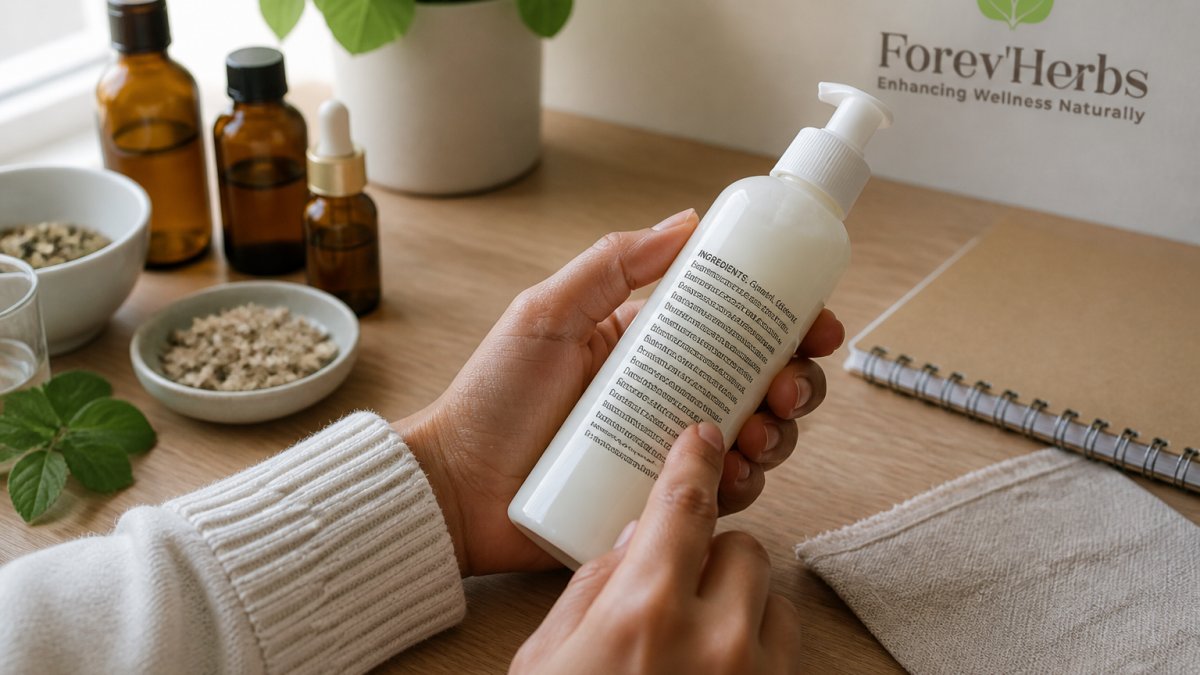
A Practical Label-Reading Checklist
Scan the full ingredient list, not just the front of the package, every time you pick up a new product.
- Fragrance, the most common catch-all term.
- Parfum, the same catch-all term under its international name.
- Perfume, another synonym for parfum.
If you see any of these terms, the product contains added scent. A product can be labeled "natural" and still contain a fragrance blend.
Why a Generic Fragrance Listing May Not Disclose the Full Mixture
When you see "fragrance" or "parfum" on a label, that single word can stand in for dozens of individual scent compounds.
This is why two products can both list "fragrance" and affect your skin very differently. People with sensitive skin often react to one fragrant product but not another, even when both list "fragrance" in the same position.
Fragrance-Free and Unscented Claims on the Label
Label claims about scent can be misleading:
- Fragrance-free, no fragrance or fragrance compounds have been added. The product may still smell like its base ingredients.
- Unscented, fragrance may have been added to mask the natural smell of the base ingredients. The product smells neutral, but fragrance can still be present.
- No added fragrance, similar to fragrance-free, but not a standardized term. Check the full ingredient list.
If you see "fragrance," "parfum," or any scent-related term, the product is not fragrance-free, even if the front label says "unscented."
Synthetic Fragrance vs. Natural Fragrance on Labels
Not all fragrance is synthetic. Some comes from essential oils or natural plant extracts, but the label will not always tell you which is which.
If you see "fragrance" or "parfum," you cannot tell whether it is synthetic, natural, or a blend of both. Specific essential oil names like "lavender oil" or "citrus oil" are natural fragrance sources, but they might still be blended with synthetic compounds.
Synthetic versus Natural Fragrance: Key Differences
The difference between synthetic and natural fragrance matters for your skin and the environment. Understanding how each is made helps you make informed choices.
How Synthetic Fragrance Is Made
Synthetic fragrance compounds are created in a lab using chemical processes. Chemists combine raw materials, often derived from petroleum, to create molecules that smell like specific scents.
Synthetic fragrance is consistent, stable, and cost-effective to produce at scale. But for skin-sensitive people, it is also more likely to trigger reactions because the skin recognizes it as a foreign chemical.
Natural Fragrance and Essential Oils
Natural fragrance comes from plants.
Essential oils contain hundreds of compounds, so your skin is exposed to a broader range of plant compounds, which some people find less irritating.
But here's the important part: natural fragrance can still cause allergic reactions and skin irritation. Just because something comes from a plant doesn't mean it's safe for sensitive skin.
Fragrance Allergy Symptoms and Skin Reactions
If your skin reacts to fragrance, you'll usually notice signs within minutes to hours of applying the product. Reactions range from mild to severe.
Common Signs of Fragrance Sensitivity
Watch for these signs of synthetic fragrance in skincare that might be irritating your skin:
- Redness that appears shortly after application
- Itching or burning sensation on the area where you applied the product
- Hives or bumps that develop within a few hours
Some people develop sensitivity over time: you might use a fragrant product for weeks without reaction, then suddenly your skin becomes irritated, because the skin's barrier can become sensitized with repeated exposure.
If you notice any of these signs, stop using the product immediately. Wash the area with gentle, fragrance-free cleanser and cool water, apply a plain moisturizer if needed, and contact a dermatologist if symptoms persist beyond a few hours.
Patch Testing Before Full Use
Before using a new skincare product on your face or body, patch test it first (the American Academy of Dermatology). This simple step can prevent a bad reaction from spreading across your skin.
- Apply a small amount to a discrete area, inside your wrist, behind your ear, or on your inner arm
- Wait 24-48 hours without washing that area
- Observe for any redness, itching, burning, or other signs of reaction
- If no reaction appears, the product is likely safe to use more broadly
If you have a history of sensitive skin or fragrance reactions, always patch test new products before applying them to your face.
Alternative Names for Fragrance in Skincare
Some brands use botanical fragrance or plant-derived fragrance to suggest their scents are natural, though they might still be synthetically recreated. Essential oil blend suggests natural ingredients, but a blend can include synthetic fragrance too.
The safest approach: if you see any scent-related term in the ingredient list, consider it fragrance. Even if the label says "natural," assume it might trigger sensitivity unless you've tested it first.
Choosing Fragrance-Free Skincare Products
If fragrance irritates your skin, fragrance-free products are your best option, but finding truly fragrance-free products requires careful label reading because marketing language can be misleading.
Fragrance-Free versus Unscented: What the Difference Means for You
Fragrance-free means no fragrance or fragrance compounds have been added to the product. The product might smell like its base ingredients, but no scent has been deliberately added.
Unscented means fragrance may have been added, but then a masking fragrance was added to hide it. The product smells neutral, but fragrance can still be present, so unscented products can still trigger reactions in people sensitive to fragrance.
Who May Want to Avoid Fragrance
Fragrance is not harmful for everyone, but some groups may want to be more cautious:
- People with sensitive or reactive skin, skin that stings, reddens, or itches easily may react to fragrance more readily.
- People with eczema, rosacea, or contact dermatitis, these conditions can be aggravated by fragrance ingredients.
- People with a known fragrance allergy, avoiding fragrance is the most reliable way to prevent another reaction.
How to Identify True Fragrance-Free Options
To find genuinely fragrance-free products:
- Read the full ingredient list, not just the front label.
- Look for products labeled "fragrance-free" rather than "unscented."
- Search for products made for sensitive skin, which are more likely to skip fragrance.
Many fragrance-free products are designed for people with eczema, rosacea, or other sensitive skin conditions, making them your safest bet if fragrance bothers you.
What to Do After a Reaction
If you suspect a product has irritated your skin:
- Stop using the product immediately. Do not try to "wait it out."
- Wash the area gently with a fragrance-free cleanser and cool water. Avoid scrubbing.
- Apply a plain, fragrance-free moisturizer if your skin feels dry or tight.
- Note the product and its ingredients so you can avoid similar formulations.
- Seek professional advice if symptoms are severe, spreading, or do not improve within a few days.
If you experience swelling of the face, lips, or throat, or difficulty breathing, seek medical attention immediately.
Patch Testing as Part of Choosing a Product
Before using a new skincare product on your face or body, patch test it first. This simple step can prevent a bad reaction from spreading across your skin.
Here is how to patch test:
- Apply a small amount of the product to a discrete area, such as inside your wrist, behind your ear, or on your inner arm.
- Wait 24 to 48 hours without washing that area.
- Observe for any redness, itching, burning, or other signs of reaction.
- If no reaction appears, the product is likely safe for you to use more broadly.
Patch testing takes patience, but it is worth it. If you have a history of sensitive skin or fragrance reactions, always patch test new products before applying them to your face.
Frequently Asked Questions
How can you tell if skincare contains synthetic fragrance?
Check the ingredient list for the word 'fragrance' or 'parfum,' which are catch-all terms that hide synthetic fragrance blends. Synthetic fragrance may also appear as 'fragrance oil,' 'fragrance blend,' or specific chemical names like 'linalool' or 'limonene.' If a product smells strong but lists no essential oils or natural scent sources, it likely contains synthetic fragrance. Reading the label carefully and understanding these hidden names is the most reliable way to identify synthetic fragrance in skincare products.
What does a fragrance allergy look like?
Fragrance allergy symptoms typically appear within minutes to hours of skin contact and include redness, itching, burning, or a rash at the point of application. Some people experience swelling, hives, or a stinging sensation. Respiratory irritation such as sneezing, congestion, or throat irritation can occur if you inhale fragrance particles. If you suspect a fragrance allergy, stop using the product immediately and perform a patch test on a small area of skin before reintroducing any new skincare to rule out contact allergy.
Is fragrance-free skincare better for sensitive skin?
Yes, fragrance-free skincare is typically gentler for sensitive skin because it eliminates a common irritant and allergen. Fragrance-free products avoid both synthetic fragrance and natural essential oils that can trigger inflammation or contact allergy in people with reactive skin. If you have eczema, rosacea, or a history of fragrance sensitivity, choosing fragrance-free skincare reduces the risk of irritation. Always check the ingredient list to confirm a product is truly fragrance-free rather than simply unscented, which may still contain fragrance masked by other ingredients.
Can strong scent in skincare mean it contains synthetic fragrance?
A strong scent often indicates synthetic fragrance, but not always. Natural essential oils and botanical extracts can also create noticeable scent. The key difference is how the scent is listed: synthetic fragrance appears as 'fragrance,' 'parfum,' or 'fragrance oil' on the label, while natural scent comes from named ingredients like 'lavender oil' or 'rose extract.' If a product has a powerful smell but lists only botanical ingredients with no fragrance term, it likely uses natural scent. If the label says 'fragrance' or 'parfum' but doesn't name the scent source, synthetic fragrance is present.