
Sustainable Skincare for Conscious Consumers: A 2026 Guide

Table of Contents
- What Sustainable Skincare Means for Conscious Consumers
- How to Spot Greenwashing in Skincare
- Natural Skincare Ingredients That Reduce Environmental Impact
- Sustainable Skincare Packaging: What to Look For
- Building a Sustainable Skincare Routine That Works
- Cruelty-Free and Vegan Formulations
- Sustainable Skincare on Different Budgets
- Frequently Asked Questions
Last Updated: October 9, 2026
What Sustainable Skincare Means for Conscious Consumers
Sustainable skincare means choosing products and routines that minimize environmental harm while delivering real results.
For conscious consumers, it's about aligning your values with your purchases without sacrificing efficacy. At Forev'Herbs, sustainable skincare isn't a trend; it's a commitment to nourishing your skin while respecting the planet that provides our ingredients.
The shift toward sustainable skincare reflects a broader recognition that what you put on your skin matters, and so does how it gets there.
How to Spot Greenwashing in Skincare
Greenwashing happens when brands use environmental language without backing it up. A jar labeled "natural" or "eco-friendly" can mask unsustainable supply chains, landfill-bound packaging, or ingredients sourced without regard for environmental impact. Most sustainability claims in cosmetics aren't pre-approved by any federal agency, so verification falls on you.
Here's a practical framework for separating real commitments from marketing spin.
1. Demand specificity, not adjectives
Vague terms like "clean," "green," "eco-friendly," and "naturally derived" have no standardized legal definition. A legitimate claim is specific and falsifiable: "packaged in 100% post-consumer recycled aluminum," "certified organic by USDA," or "no animal testing at any stage by us or our suppliers." If a brand can't say exactly what makes a product sustainable, treat the claim as unverified.
2. Check certifications and understand their scope
Third-party certifications carry weight because they require independent verification, but each covers a different slice of sustainability:
- USDA Organic verifies agricultural ingredient production and processing standards for organic content. It does not address packaging, animal testing, or carbon footprint.
- Leaping Bunny verifies that no animal testing occurs at any stage of product development, including supplier-level ingredient testing. It does not address environmental impact.
- Fair Trade Certified verifies social, economic, and environmental standards for specific ingredients like shea or cocoa. It applies only to the certified ingredient, not the whole product.
A product can carry one seal and still fall short elsewhere. Treat certifications as evidence for the specific claim they cover, not a blanket sustainability guarantee.
3. Trace ingredient sourcing
Ask where botanical ingredients come from and how they're grown. Legitimate brands disclose origin countries, farming methods, and whether ingredients are wild-harvested or cultivated. Red flags: "naturally derived" with no origin, undisclosed palm derivatives (which hide under names like sodium lauryl sulfate, cetearyl alcohol, and glycerin), and refusal to answer supplier questions. For palm oil, look for Roundtable on Sustainable Palm Oil (RSPO) membership or segregated supply chain claims, since palm cultivation drives tropical deforestation.
4. Scrutinize packaging claims
"Recyclable" is one of the most abused terms in skincare. A package is only recyclable if your local program actually accepts it. Common problems:
- Pump dispensers and droppers contain mixed materials (plastic, metal springs, rubber) that most curbside programs reject.
- Black plastic is often not detected by optical sorting equipment at recycling facilities.
- Small containers under roughly 2 inches are frequently screened out.
Look for brands that publish disposal instructions, offer refill or take-back programs, or use single-material packaging like glass, aluminum, or #1 and #2 plastics.
5. Verify cruelty-free claims beyond the label
"Cruelty-free" should mean no animal testing at any stage, including ingredient suppliers. Some brands claim this while using ingredients tested on animals by third-party suppliers. Leaping Bunny certification requires supplier monitoring, which is why it outweighs a self-issued bunny logo. If a brand sells in markets that legally require animal testing (like mainland China for imported cosmetics), ask how they reconcile that.
6. Follow the money and the ownership
Woman- and minority-owned businesses, like Forev'Herbs, often have deeper accountability to their communities and tend to prioritize authentic sustainability over marketing spin. But ownership alone isn't proof. Check whether the company publishes an impact report, discloses its supply chain, and sets measurable goals with dates. A brand that says "we care about the planet" without numbers is telling a story, not showing a record.
Natural Skincare Ingredients That Reduce Environmental Impact
Natural ingredients form the foundation of sustainable skincare, but not all are created equal, the difference lies in how they're sourced, grown, and processed.
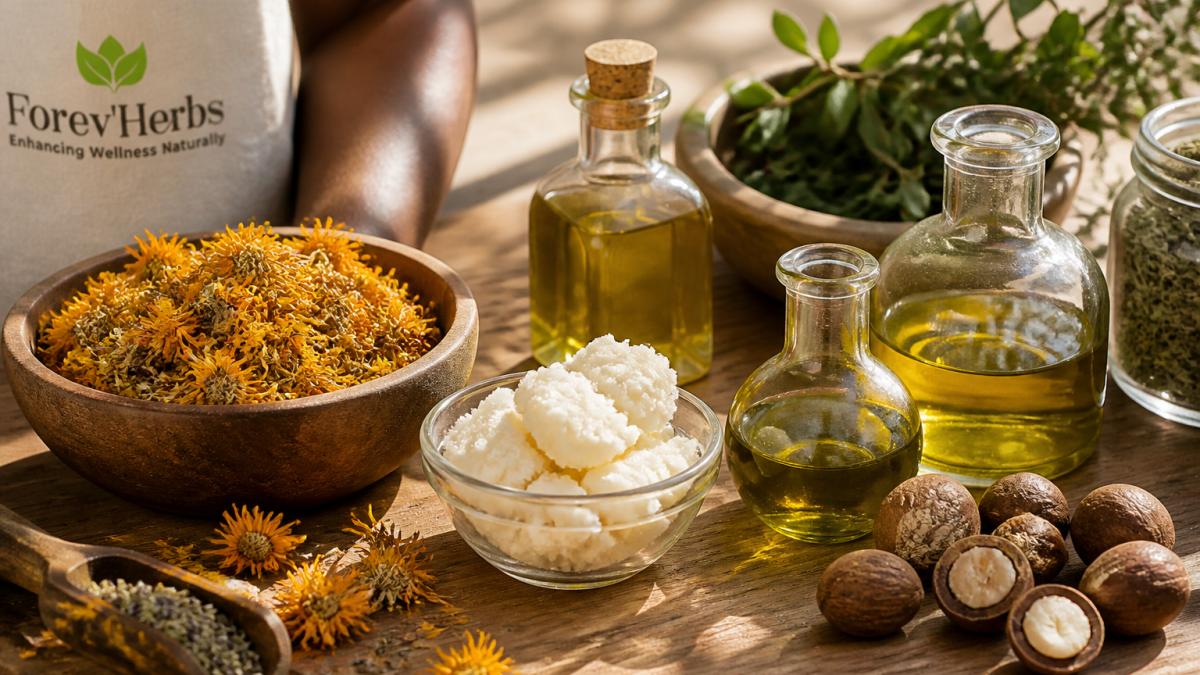
Botanical ingredients like organic shea butter, sustainably harvested palm oil, and plant-based oils require less processing than synthetics and often have lower carbon footprints.
The real advantage is biodegradability.
Look for products that list recognizable plant-based ingredients first.
Sustainable Skincare Packaging: What to Look For
Packaging is the most visible slice of skincare's environmental impact, but the full picture is bigger than the bottle. A product's lifecycle footprint spans ingredient cultivation, manufacturing, transport, product use, and disposal, and packaging is the part you interact with daily.
The lifecycle view: where impact really comes from
Ingredient cultivation often dominates the footprint of botanical skincare: conventional farming uses synthetic fertilizers, pesticides, and irrigation, while organic and regenerative methods cut those inputs but may use more land.
So a product in perfect packaging can still carry a heavy footprint if its ingredients are intensively farmed and shipped far. A locally made product in modest packaging may outperform a premium import in a refillable jar.
What good packaging looks like
- Single-material design, Glass, aluminum, or a single plastic resin (#1 PET or #2 HDPE) are easier to recycle than mixed-material pumps and droppers.
- Post-consumer recycled (PCR) content, Packaging made with PCR reduces demand for virgin plastic and is often labeled with a percentage.
- Refillable containers, Brands offering refills reduce waste significantly over time, but only if the refill itself uses less packaging than the original.
- Minimal packaging, Less cardboard, fewer plastic layers, no unnecessary inserts or shrink wrap.
- Plastic-free alternatives, Glass bottles, aluminum tubes, or certified compostable materials where local infrastructure supports them.
- Zero-waste shipping, Recyclable or compostable packing materials instead of plastic air pillows and tape.
Practical disposal: how to actually recycle skincare packaging
Recycling rules vary by municipality, so always check your local program's accepted materials list. General guidance:
- Glass jars and bottles: Rinse thoroughly, remove lids and pumps, and recycle the glass if accepted. Metal lids can often be recycled with metals.
- Aluminum tubes and tins: Rinse and recycle where aluminum is accepted. Some programs require tubes to be emptied and flattened.
- Plastic bottles (#1 and #2): Rinse, remove caps and pumps, and recycle the bottle. Caps can often be recycled separately if they're #5 polypropylene.
Refill and take-back programs: how they work
Refill programs vary widely. Some brands sell concentrated refills in lightweight pouches that cut plastic versus a new bottle; others offer in-store refill stations where you bring your own container. Take-back programs accept empties for reuse or recycling but depend on the brand's logistics and may require shipping, which adds emissions. Before choosing a refill, compare its packaging weight and material against the original to confirm it's actually lower-impact.
Sensitive & Dry Skin Body Oil →
The trade-offs to weigh
Glass is infinitely recyclable but heavy, so transport emissions can exceed lightweight plastic. Aluminum is highly recyclable and light but energy-intensive to produce. PCR plastic cuts virgin plastic demand but still relies on plastic infrastructure. No material is perfect; the best choice depends on your local recycling access, how far the product travels, and whether refills exist.
The sustainable skincare routine starts before you open the product. Choosing brands that use Fair Trade ingredients, sustainable palm oil, and packaging you can actually recycle or refill supports better practices throughout the supply chain.
Building a Sustainable Skincare Routine That Works
A sustainable skincare routine doesn't mean complicated, it means intentional: fewer, better products that address your skin's needs while aligning with your values.
Start with the basics: a gentle cleanser, a moisturizer suited to your skin type, and sunscreen. Forev'Herbs offers handmade soaps like our Unscented Oatmeal Handmade Soap ($6.75), which combines goat milk and gentle oatmeal for nourishing cleansing, and our Sensitive & Dry Skin Body Oil ($19.99) for deep hydration with botanical oils.


Then add targeted treatments only if your skin needs them. If you have eczema or chronic dryness, our Eczema Cream ($15.99) provides relief with refined shea butter, organic calendula-infused olive oil, and colloidal oatmeal, ingredients selected for both efficacy and environmental responsibility.
The key is consistency over complexity. A simple routine you'll actually stick with beats an elaborate one you abandon. Sustainable skincare also means using products fully before replacing them, not cycling through dozens of half-empty bottles.
Cruelty-Free and Vegan Formulations
Cruelty-free skincare means no animal testing at any point in development or manufacturing. Vegan skincare goes further, excluding all animal-derived ingredients like beeswax, lanolin, or carmine.
For conscious consumers, cruelty-free certification matters because third parties verify it, look for Leaping Bunny or similar audits. Vegan formulations appeal to those avoiding animal products entirely, though some animal-derived ingredients like honey or beeswax can be sustainably sourced.
Our handmade soaps use plant oils and botanical extracts, suiting consumers seeking cruelty-free options.
Sustainable Skincare on Different Budgets
Sustainable skincare doesn't require a fortune, but it does require intentional spending.
Budget-conscious approach: Start with one or two core products from a trusted sustainable brand rather than many mediocre ones. Our Unscented Shea Handmade Soap ($6.75) uses Fair Trade, sustainably sourced shea butter and organic oils, delivering real value for conscious consumers.

Mid-range: Invest in a quality moisturizer and a targeted treatment for your concern. Our Sensitive & Dry Skin Body Oil ($19.99) offers lasting botanical hydration, reducing frequent repurchasing.
Higher budget: Choose brands with refillable options or subscriptions that reduce packaging waste over time.
The real savings come from choosing products that actually work for your skin.
Building a sustainable skincare routine as a conscious consumer means aligning daily choices with your values without compromising on results. Our Eczema Cream, handmade soaps, and botanical body oils reflect our commitment as a woman and minority-owned business to genuine sustainability and transparent sourcing.
Frequently Asked Questions
What makes a skincare product truly sustainable?
Sustainable skincare combines three elements: responsibly sourced natural ingredients, eco-friendly packaging that minimizes waste, and ethical manufacturing practices. Look for brands that disclose where ingredients come from, use recyclable or refillable containers, and commit to reducing their carbon footprint. Certifications like Fair Trade or Green Business designations provide third-party verification that a brand follows through on sustainability claims rather than using marketing language alone.
How can I spot greenwashing in skincare?
Greenwashing happens when brands use vague terms like 'natural' or 'eco-friendly' without backing them up. Red flags include missing ingredient lists, unverifiable certifications, or claims without third-party testing. Authentic sustainable brands publish their sourcing practices, list all ingredients clearly, and hold recognized certifications. Ask yourself: Can I trace where the ingredients come from? Does the brand explain its manufacturing process? Are there independent certifications visible on the label?
Are organic skincare products always more sustainable?
Organic certification proves ingredients were grown without synthetic pesticides, which benefits soil and water systems. However, organic alone doesn't guarantee full sustainability. An organic product shipped globally in plastic packaging may have a larger carbon footprint than a non-organic product in recyclable packaging made locally. True sustainability requires looking at the entire lifecycle: ingredient sourcing, manufacturing, packaging materials, and shipping distance.
What should I look for in sustainable skincare packaging?
Prioritize packaging made from recycled materials, glass, or aluminum that's fully recyclable. Refillable containers reduce waste significantly since you keep the original packaging and purchase refills. Plastic-free options like paper tubes or solid bars are excellent choices. Check if the brand offers take-back programs for empty containers. Minimal packaging that avoids excess plastic, cardboard, or unnecessary layers demonstrates a commitment to reducing environmental impact at every stage.
How do I build a sustainable skincare routine that actually works for my skin?
Start by identifying your skin type and concerns, then select multi-purpose products that address several needs to reduce the number of items you buy. Choose concentrated formulas that last longer. Invest in quality products with proven ingredients rather than buying many cheap options you'll discard. Rotate seasonal products rather than maintaining a year-round collection. Focus on brands with transparent ingredient lists and customer reviews that confirm efficacy, not just sustainability claims. This approach reduces waste while ensuring your skin stays healthy.
How can I verify that a brand's sustainability claims are real?
Look for specific, measurable commitments rather than vague promises. Legitimate sustainable brands publish detailed sourcing information, ingredient transparency reports, and third-party certifications. Check if they're certified by recognized bodies like Fair Trade USA or hold Green Business certifications. Read customer reviews that mention product quality and results, not just environmental claims. Reach out directly with questions about manufacturing practices and supply chain ethics. Brands committed to sustainability are transparent about their processes and happy to answer detailed questions.
Is sustainable skincare more expensive?
Sustainable products often cost more upfront due to ethical sourcing, quality ingredients, and smaller batch production. However, concentrated formulas and multi-purpose products reduce the total number of items you need, offsetting higher per-product costs. Many sustainable brands offer options at different price points. Consider cost-per-use rather than price alone: a higher-quality product that lasts longer and delivers results may be more economical than cheaper alternatives you replace frequently.