
5 Key Differences Between FarmHouse Fresh and KORA Organics

Last Updated: October 24, 2026
Quick Summary
FarmHouse Fresh vs KORA Organics differs primarily in certification and positioning: FarmHouse Fresh emphasizes straightforward ingredient transparency and accessible natural skincare, while KORA Organics offers third-party organic certification under COSMOS standards with a luxury wellness narrative. Your choice depends on whether you prioritize ingredient clarity or verified organic certification.
- FarmHouse Fresh uses recognizable botanicals with explicit sourcing but lacks uniform third-party organic certification across its line.
- KORA Organics products are COSMOS-certified organic, meaning independent auditors verify organic content and supply chain traceability.
- FarmHouse Fresh routines are simple and efficient, while KORA Organics emphasizes layered, ritual-based multi-step routines.
- For sensitive skin, FarmHouse Fresh's minimalist formulations may work better than KORA Organics' concentrated botanicals for some individuals.
- KORA Organics pricing reflects certification depth and luxury positioning, while FarmHouse Fresh offers accessible natural skincare without premium branding.
Table of Contents
- FarmHouse Fresh vs KORA Organics: Brand Philosophy and Sourcing
- FarmHouse Fresh Ingredients and Certifications
- KORA Organics Ingredients and Certifications
- FarmHouse Fresh vs KORA Organics for Sensitive Skin
- Building an Organic Skincare Routine with the Right Brand
- Price, Value, and Transparency: What You're Really Paying For
- Frequently Asked Questions
FarmHouse Fresh vs KORA Organics: Brand Philosophy and Sourcing
When you're shopping for organic skincare, the choice between FarmHouse Fresh and KORA Organics often comes down to philosophy. Both brands emphasize natural, plant-based ingredients and clean beauty principles. But how they source, formulate, and communicate their values tells very different stories.
FarmHouse Fresh positions itself as a Texas-rooted brand focused on botanical extracts and natural skincare routines built around simplicity. The brand emphasizes accessibility and practical wellness for everyday users. KORA Organics, founded by Miranda Kerr, takes a more luxury-oriented approach with certified organic botanicals and a strong wellness narrative around self-care and holistic beauty.
The real difference emerges in their ingredient transparency. Both brands highlight botanical sourcing, but they communicate it differently. FarmHouse Fresh tends toward straightforward product descriptions and ingredient lists. KORA Organics weaves storytelling around each botanical extract, connecting ingredients to specific skin benefits and wellness outcomes. For readers evaluating FarmHouse Fresh vs KORA Organics, this distinction matters: one prioritizes clarity, the other prioritizes narrative.
Understanding organic certification standards in skincare helps clarify what "organic" actually means on these labels. Both brands make organic claims, but the depth of third-party verification varies. This is where ingredient sourcing becomes more than marketing, it's about accountability. Understanding the science behind organic skincare claims allows you to anchor words and evaluate both brands' philosophies more critically.
FarmHouse Fresh Ingredients and Certifications
FarmHouse Fresh formulates around recognizable botanicals, and the product pages are unusually explicit about which plant each hero ingredient comes from. The most-cited examples across the range include turmeric root, green tea leaf, cucumber, pumpkin, and various cold-pressed plant oils. The brand's marketing leans on the idea that you can read an ingredient list and know what you are putting on your skin, which is a real differentiator for shoppers who find luxury organic labels hard to decode.
On certifications, the picture is more mixed than the brand's clean-beauty language implies. FarmHouse Fresh products commonly carry "free-from" claims, no parabens, no sulfates, no synthetic fragrance, and many are marketed as gluten-free and cruelty-free. However, the brand does not uniformly carry a single third-party organic certification across its line the way certified-organic competitors do. Some products carry natural-product designations, and the specific certifying body can vary by SKU.
Understanding organic certification standards in skincare is useful here because the FTC's guidance on "organic" claims distinguishes between products that are certified and products that simply use organic ingredients. A product can contain organic botanicals without being certified organic, and that distinction matters when you are comparing brands.
A practical audit approach: pull the ingredient list for the specific FarmHouse Fresh product you are considering, identify the first five ingredients (which make up the bulk of the formula), and check whether the botanicals you care about appear before or after the preservative and fragrance line. In many FarmHouse Fresh formulas, the botanical actives sit in the middle of the list, with water and glycerin at the top, which is normal for water-based skincare but worth knowing if you are paying a premium for a specific extract.
The brand's bestsellers, including its turmeric mask and several botanical serums, tend to be the products where the ingredient story is clearest. If certification depth is your priority, treat those hero SKUs as the starting point and verify the certifying body on each one rather than relying on the brand-level claim.
KORA Organics Ingredients and Certifications
KORA Organics is one of the few brands in this category that can point to a named, auditable organic standard rather than a marketing phrase. The brand's products are certified organic under COSMOS, a standard administered by independent certifying bodies that verifies organic content, prohibits certain synthetic ingredients, and requires documented sourcing.
What COSMOS certification actually requires is worth understanding before you pay for it. The standard sets minimum thresholds for organic content in the finished formula, restricts petrochemical ingredients and synthetic fragrances, and requires traceability for certified organic raw materials. In practice, that means a COSMOS-certified KORA product has had its supply chain reviewed by an outside auditor, not just its marketing copy.
The ingredient philosophy centers on concentrated botanicals, rosehip oil, turmeric, neem, and noni extract among them, and the brand tends to place these higher in the ingredient list than mass-market natural brands do. That concentration is part of why the products feel heavier and more oil-forward than a typical water-based serum, and it is also why patch-testing matters more with KORA than with a minimalist botanical line.
A certification audit you can actually run: look for the COSMOS logo on the specific product page, not just the brand homepage, because certification is granted per product and per manufacturing site. Cross-check the certifying body named on the logo, since COSMOS is administered by several independent organizations, and confirm the product's organic percentage if the brand publishes it.
COSMOS organic certification standard overview explains the thresholds and prohibited-ingredient lists in detail, which is the fastest way to compare KORA's claims against a competitor's "clean" language on equal terms. The short version: KORA's certification is real and verifiable, but it is product-specific, so the brand-level claim is only as strong as the individual SKU you are buying.
FarmHouse Fresh vs KORA Organics for Sensitive Skin
Sensitive skin requires careful ingredient selection. Both brands market products suitable for sensitive skin, but their approaches differ in meaningful ways.
FarmHouse Fresh's sensitive skin line typically features shorter ingredient lists and focuses on non-irritating botanical extracts. The brand's approach emphasizes avoiding common irritants, fragrance, essential oils at high concentrations, and synthetic actives. For consumers with eczema or reactive skin, this simplicity can be advantageous. The turmeric mask and gentle serums are often recommended for sensitive skin types, though individual responses vary.
KORA Organics positions its sensitive skin products within a luxury framework. The botanical extracts are certified organic, which technically means no synthetic pesticides, but organic botanicals can still trigger sensitivity in some individuals. The brand's serums and facial oils are gentler than their masks, making them better suited for reactive skin. However, the higher botanical concentrations may be less ideal for extremely sensitive individuals compared to FarmHouse Fresh's more minimalist formulations.
A practical consideration: when choosing between these brands for sensitive skin, test patch first. Neither brand's certification or ingredient list guarantees individual compatibility. Explore gentle Kora Organics alternatives for sensitive skin to understand the full spectrum of options available. Some consumers find FarmHouse Fresh's simpler formulations work better for eczema or severe sensitivity, while others respond well to KORA Organics' concentrated botanicals. The difference often comes down to individual skin reactivity rather than brand superiority.
Building an Organic Skincare Routine with the Right Brand
Creating a consistent skincare routine requires choosing a brand whose product range and philosophy align with your needs. Both FarmHouse Fresh and KORA Organics offer complete routines, cleanser, toner or essence, serum, mask, and moisturizer, but they structure these differently.
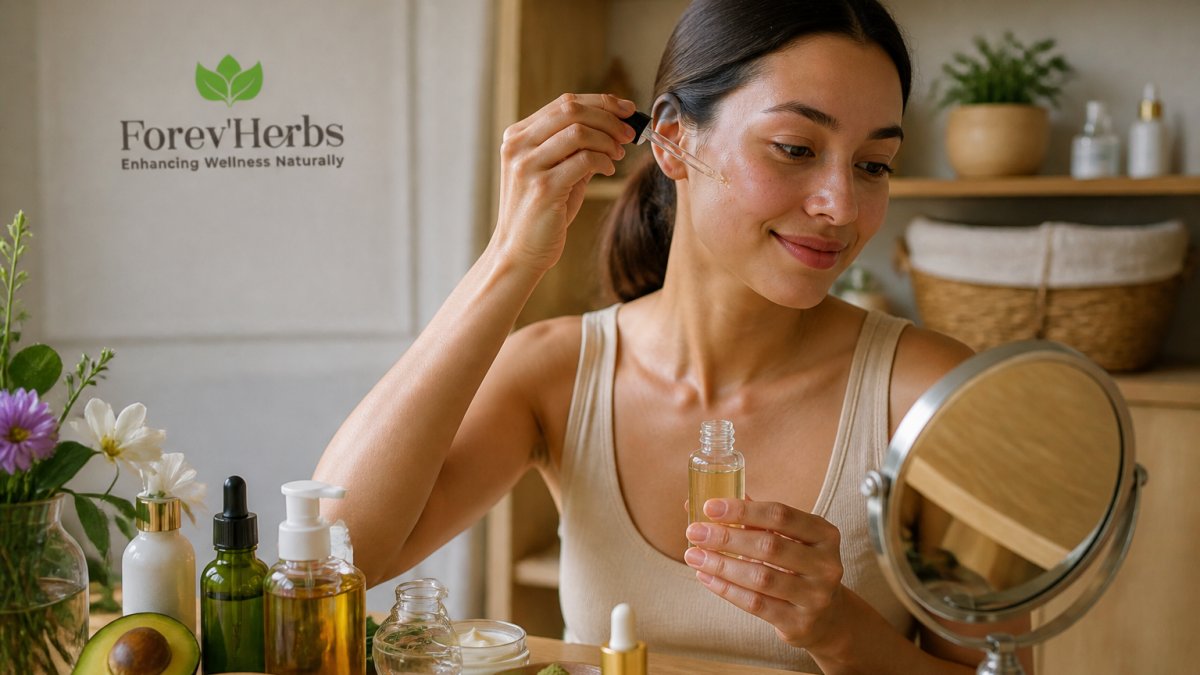
FarmHouse Fresh routines tend to be straightforward: cleanser, targeted treatment (serum or mask), and moisturizer. The simplicity appeals to consumers who want effective skincare without complexity. The brand's bestsellers work well together, and the product range supports layering without overwhelming choices. For someone new to organic skincare, this clarity is valuable.
KORA Organics routines emphasize layering and ritual. The brand encourages using multiple products, essence, serum, facial oil, and moisturizer, as part of a complete wellness practice. This approach suits consumers who view skincare as self-care and have the time and budget for multi-step routines. The products are designed to work synergistically, with each botanical extract playing a specific role.
When building your routine, consider your skin type, primary skin concerns, and available time. FarmHouse Fresh works well for consumers seeking efficient, effective routines with minimal steps. KORA Organics suits those wanting comprehensive, ritual-based skincare with premium positioning. Neither approach is inherently superior, the fit depends on your lifestyle and skin needs.
For sensitive skin specifically, consider starting with fewer products and adding gradually. Try a gentle, organic product option that works with either brand's skincare routine to test compatibility before committing to a full line.
Price, Value, and Transparency: What You're Really Paying For
Price differences between FarmHouse Fresh and KORA Organics reflect different market positioning and production approaches. Understanding what drives these differences helps you evaluate whether the investment aligns with your needs.
FarmHouse Fresh positions itself as accessible natural skincare. Product pricing reflects this positioning, generally lower than luxury organic brands, though higher than mass-market drugstore options. The value proposition centers on effective, straightforward formulations without unnecessary complexity or premium branding.
KORA Organics commands higher pricing, reflecting several factors: third-party organic certifications, celebrity founder positioning, luxury brand infrastructure, and higher botanical concentrations in formulations. The brand's storytelling and wellness narrative also factor into pricing. Consumers paying KORA Organics prices are investing in brand positioning alongside product efficacy.
Neither brand's pricing automatically indicates superior product performance. A higher price reflects certification depth, brand positioning, and production costs, not necessarily better results for your skin. Learn how to spot greenwashing and verify transparency claims made by both brands to understand whether you're paying for genuine organic certification or premium branding.
Transparency matters here. Both brands publish ingredient lists and make organic claims, but the depth of sourcing information varies. FarmHouse Fresh emphasizes ingredient clarity; KORA Organics emphasizes certification and botanical storytelling.
| Aspect | FarmHouse Fresh | KORA Organics |
|---|---|---|
| Positioning | Accessible natural skincare | Luxury organic wellness |
| Certifications | Natural product designation | Third-party organic certified |
| Ingredient Approach | Straightforward, minimal lists | Concentrated botanicals with narrative |
| Routine Structure | Simple, efficient steps | Layered, ritual-based |
| Transparency Focus | Ingredient clarity | Certification and storytelling |
| Best For | Practical, effective routines | Wellness-focused, premium positioning |
Choosing between FarmHouse Fresh and KORA Organics comes down to your priorities: Do you value straightforward ingredient transparency and accessible pricing, or do you prefer luxury positioning and third-party organic certification? Both deliver natural, plant-based skincare. The real difference is in philosophy and positioning.
If you're looking for an alternative that bridges these approaches, combining genuine organic ingredients with transparent sourcing and accessibility, consider Forev'Herbs. As a woman and minority-owned business, Forev'Herbs brings certified natural credentials and botanical expertise to organic skincare without the luxury markup.
Frequently Asked Questions
How does FarmHouse Fresh compare with KORA Organics for sensitive skin?
Both brands emphasize natural, botanical-based formulations suitable for sensitive skin, but they differ in approach. For sensitive skin, the choice depends on whether you prioritize ingredient simplicity or certified organic standards. Patch test either brand first, as sensitivities vary by individual skin type and specific ingredients.
What are the main differences in FarmHouse Fresh ingredients versus KORA Organics ingredients?
FarmHouse Fresh ingredients emphasize botanical extracts and natural remedies with transparency about sourcing. KORA Organics ingredients are certified organic, with a focus on minimal processing. FarmHouse Fresh tends toward accessible, straightforward formulations, while KORA Organics leans into premium, certified organic certification as a core differentiator. KORA's organic certification represents a higher regulatory standard.
Are FarmHouse Fresh and KORA Organics products suitable for children with eczema?
Both brands offer gentle formulations that appeal to parents seeking natural relief, but results vary by child. KORA Organics targets adult skincare but uses mild, certified organic botanicals. For severe eczema, consult a dermatologist before switching brands. Patch testing on a small area first helps identify whether your child's skin tolerates either brand's specific botanical blend.
How do I build an organic skincare routine that actually works for my skin type?
Start by identifying your skin type: dry, oily, combination, or sensitive. Choose a cleanser suited to that type, follow with a targeted serum or treatment addressing your main concern, and finish with a moisturizer and sunscreen. Both FarmHouse Fresh and KORA Organics offer product ranges covering these basics. Introduce one new product at a time over two weeks to spot potential irritants. Consistency matters more than brand switching; give your routine at least four weeks before assessing results.
